BRIEF US!
Design illuminating activations around the world with us.

THANK YOU FOR YOUR REQUEST
Thank you very much for your interest in EIDETIC MARKETING.
We look forward to working with you.
We will contact you soon.Thanks Again.

THERE WAS A PROBLEM WITH YOUR SUBMISSION.
Have you checked all the required fields?
We want you to write your Company, Name, E-mail, Budget, Country to Execute, Website URL, Wanted Services and Project Description.Thanks.

Monthly Archives: April 2026
G-STAR 2026 Booth Application: Dates, Costs, Rules, and Tips
April 3, 2026
G-STAR 2026 Booth Application: Dates, Costs, Rules, and Tips
For game companies planning to enter the Korean market, G-STAR remains one of the most important exhibition opportunities in Asia. As Korea’s leading game show, it brings together major publishers, industry professionals, media, and a large consumer audience in one place. For exhibitors, it is more than a booth opportunity. It is a platform to launch new IP, build visibility, create memorable fan experiences, and generate measurable marketing outcomes.
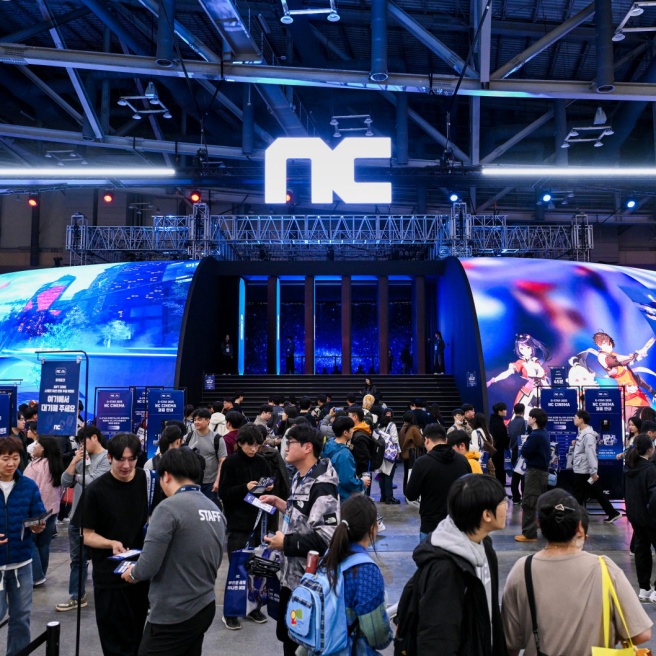
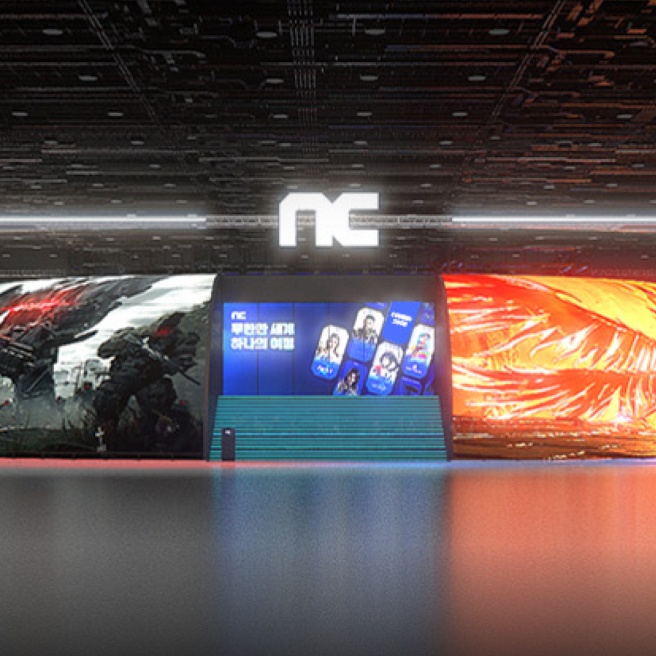
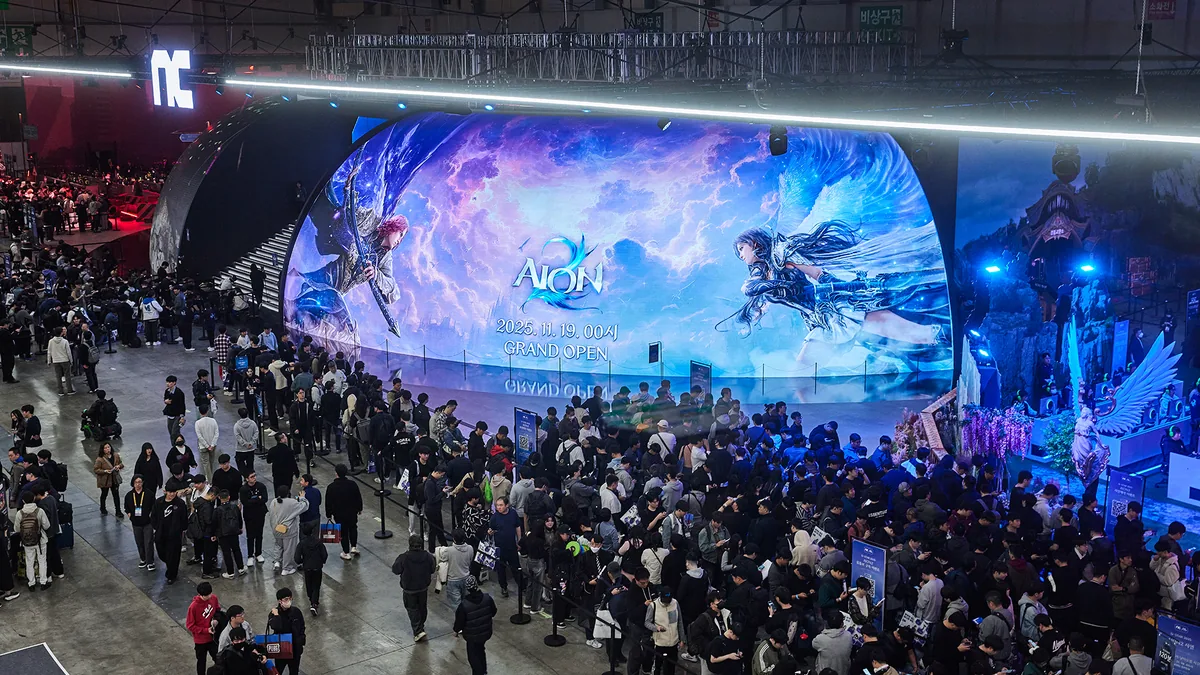
We supported NC, the main sponsor of G-STAR 2025, on the exhibition’s largest booth at 2,400㎡, while also leading integrated G-STAR marketing projects for major game brands. That experience shapes how we approach booth strategy, audience flow, on-site engagement, and performance-driven exhibition planning.
If you are starting your G-STAR 2026 booth application, preparation needs to begin earlier than many first-time exhibitors expect. Booth location, concept development, interactive content, event operations, merchandise, and compliance requirements all affect performance on-site.
This guide covers the key dates, booth costs, discounts, cancellation rules, exhibitor considerations, and planning points game companies should know before exhibiting at G-STAR 2026.
Why G-STAR Matters for Global Game Companies
G-STAR is one of the most important gaming exhibitions in Asia and a key platform for brands looking to build visibility in Korea. It brings together global publishers, industry professionals, media, creators, and a large public audience in one space.
For game companies, a G-STAR booth can serve several purposes at once:
- • Launch a new title or IP in Korea
- • Build fan engagement through demos and live experiences
- • Create social, PR, and community content
- • Support business meetings during the show
- • Turn offline attention into measurable brand impact
The strongest booths are not only visually striking. They are strategically designed to turn attention into participation, content generation, and long-term brand recall.
Key Dates for G-STAR 2026 Booth Application
Here are the key dates exhibitors should keep in mind for G-STAR 2026.
| Category | Date |
|---|---|
| B2C | November 19–22, 2026 |
| B2B | November 19–21, 2026 |
| Early bird application | March 3, 2026 at 14:00 – April 30, 2026 at 17:00 |
| General application | May 26, 2026 – July 31, 2026 at 16:00 |
*The early bird application period includes a 10% discount on booth fees.
*One important planning note: G-STAR is typically scheduled around Korea’s college entrance exam season, and visitor traffic often rises noticeably from the second day of the exhibition. For game companies targeting student and young adult audiences, that can be a strong reason to plan event timing, promotions, and audience engagement carefully.
How to Apply for a G-STAR 2026 Booth
The G-STAR 2026 booth application process is relatively simple at the organizer level.
The standard process is:
- 1. Create an account on the official G-STAR website.
- 2. Submit the exhibitor application online.
- 3. Wait for organizer approval.
- 4. Pay the participation fee according to the organizer’s instructions.
For most brands, the real work starts long before the form submission. Early planning affects booth location options, agency selection, design quality, influencer casting, and production readiness. If you are preparing vendor outreach, our guide on how to write an RFP for G-STAR booth design and production can help structure the process more clearly.
How Much Does a G-STAR Booth Cost?
The base participation fee starts at KRW 2,000,000 per independent booth unit, based on a 3m x 3m space, with applications available from two booths or more.
| Base rate | KRW 2,000,000 per booth |
| Booth type | Independent booth |
| Booth size | 3m x 3m |
| Minimum application | 2 booths |
This should be understood as the starting point rather than the full exhibition budget. Actual costs vary depending on booth scale, design complexity, fabrication, graphics, content production, staffing, giveaways, and on-site operations.
For many exhibitors, booth cost is not only about rental price. It is also about how effectively that investment turns into visibility, audience engagement, and post-event marketing value.
Available Discounts
G-STAR 2026 offers a layered discount structure, and eligible exhibitors may receive up to 30% off in total.
| Eligibility | Benefit |
| Early bird application | 10% |
| Participated in G-STAR within the past two years | Additional 10% |
| K-GAMES member or company in a government-approved association | Additional 10% |
*Maximum total discount: Up to 30%
*Discount cap: Applicable to up to 50 booths
This structure makes early planning especially valuable for large exhibitors. Applying early can reduce costs while also improving the chances of securing a better booth position and a more organized preparation schedule.
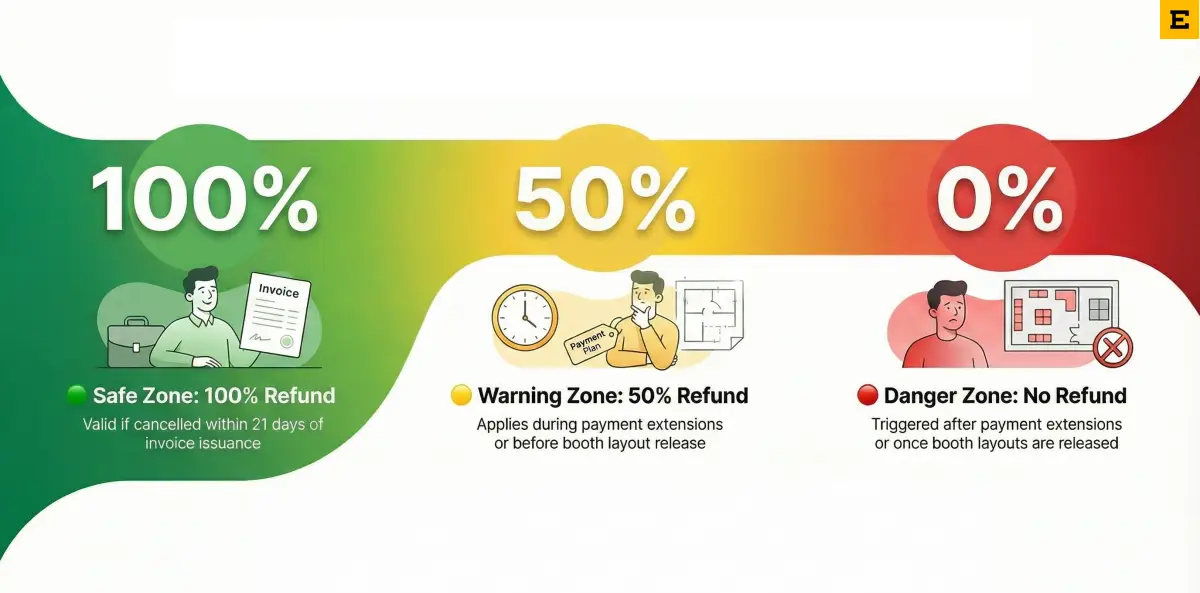
What Happens If You Cancel?
Cancellation penalties depend on timing.
- ✔️Within 21 days after invoice issuance: full refund
- ✔️During the extended payment period or before booth layout disclosure: 50% of the participation fee
- ✔️After the extended payment period or after booth layout disclosure: 100% of the participation fee
Because organizer policies may change year to year, it is best to confirm the latest cancellation terms with the secretariat before publishing or finalizing decisions internally.
A Practical G-STAR 2026 Planning Roadmap
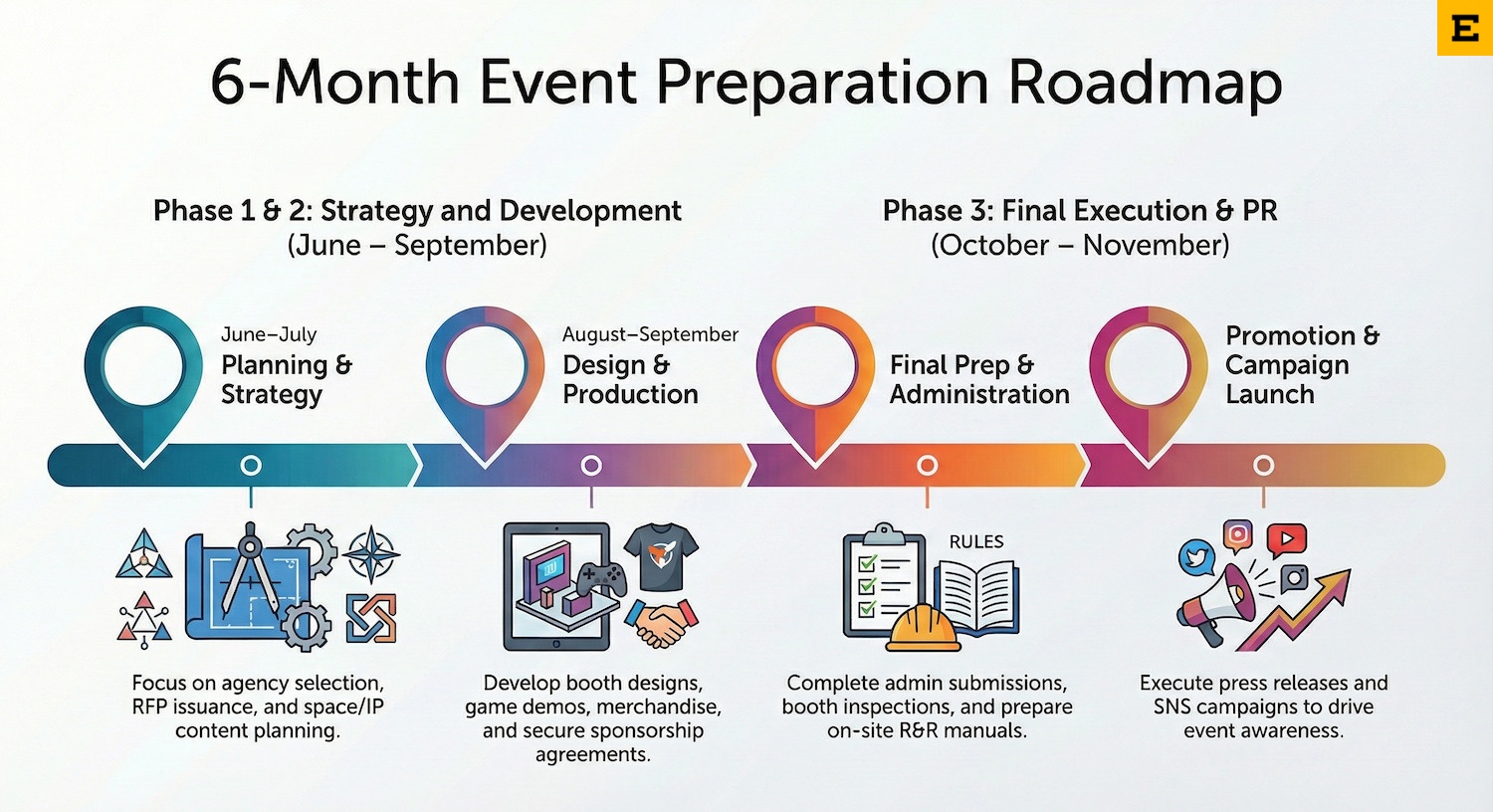
A successful G-STAR booth takes shape over several months, not just a few weeks before the show. In most cases, June to July is the time to define strategy, select partners, and plan booth experience. August to September should focus on design, content production, and event development, while October to November is when operations, promotion, and on-site readiness come together.
If your booth concept includes a major visual centerpiece, large-format object, or high-impact photo landmark, our guide to game exhibition hero installation may also be useful.
Can You Sell Merchandise at G-STAR?
Yes, merchandise sales are possible if the exhibitor receives prior approval.
If you plan to sell goods on-site, you must submit a sales plan within the required deadline. There are also important restrictions:
- ✔️products unrelated to the exhibition or the game title are not allowed
- ✔️food and beverage sales require separate local approvals and food-service registration where applicable
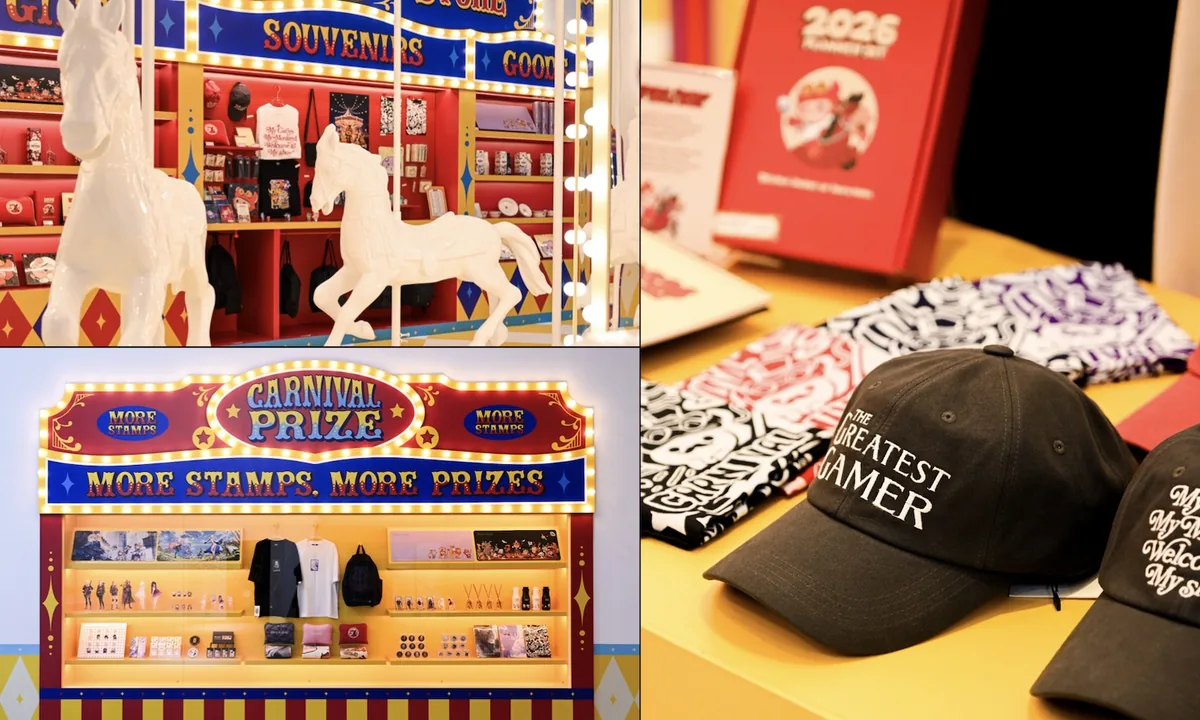
For many game brands, merchandise is not just an additional revenue stream. It is a tool for fan participation, queue management, and shareable brand memory. If you are exploring concept directions, our article on game booth ideas for successful gaming conventions offers useful inspiration for combining merchandise, interaction, and booth storytelling.
Is Catering Allowed at G-STAR?
Catering may be possible, but it requires advance discussion with the organizer and must comply with venue hygiene and safety rules.
- 1. no on-site cooking inside the exhibition hall
- 2. only pre-prepared food formats may be allowed
- 3. beverage service is limited and may require pre-prepared drinks in disposable cups
That means hospitality should be designed around compliance from the beginning, not added at the last minute.
Rules for Age-Rated Game Content
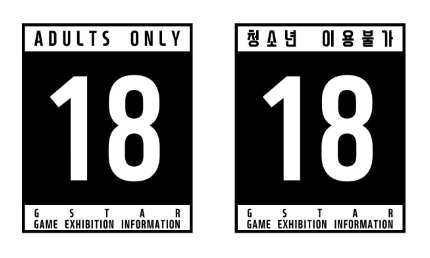
If your game is restricted for youth audiences, separate booth regulations apply.
These may include:
- • required age-rating signage near the booth entrance
- • restrictions on visibility from outside the booth
- • enclosed or screened demo areas for adult-rated content
- • mandatory ID checks for visitors entering or trying the content
- • age restrictions limiting participation to eligible adults only
For exhibitors, this is not a minor detail. Age-rating compliance affects space planning, queue design, staffing, and visitor flow. It should be integrated into the booth plan from the concept stage onward.
What Makes a G-STAR Booth Successful?
At G-STAR, booth performance is shaped by more than visual scale. Strong results usually come from how well strategy, design, operations, and content work together.
The most effective booths typically share a few characteristics:
- • Clear IP visibility from the aisle
- • Well-managed visitor flow and queue design
- • Interactive content that invites participation
- • Built-in opportunities for social sharing and PR coverage
- • Operational planning that supports both fan experience and staff efficiency
For more tactical ideas, you can also read our post on G-STAR Korea gaming expo booth design and operation tips.
How Eidetic Supports Game Brands at G-STAR
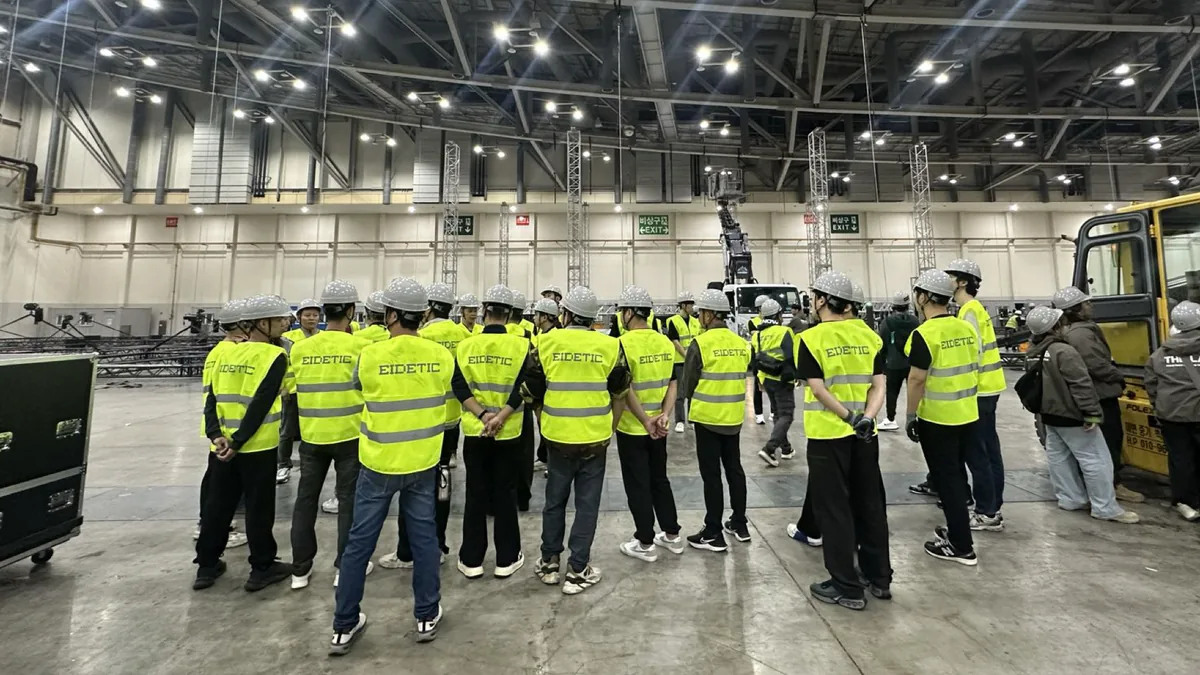
We have supported game brands at G-STAR through integrated planning, design, production, and on-site execution. Our recent work includes NC’s 2,400㎡ booth at G-STAR 2025 and multi-year G-STAR marketing support for Webzen.
What makes this model effective is continuity. The people involved in the proposal and planning stages remain connected to the project through booth design, fabrication supervision, graphic quality control, and live operations. That helps preserve the original strategy all the way through execution.
For exhibition projects, that continuity matters. When decision-making is fragmented across too many external partners, timelines slow down and the original intent often weakens. An in-house system makes it easier to respond quickly, maintain creative consistency, and solve problems in real time on-site.
Frequently Asked Questions: G-STAR Korea 2026
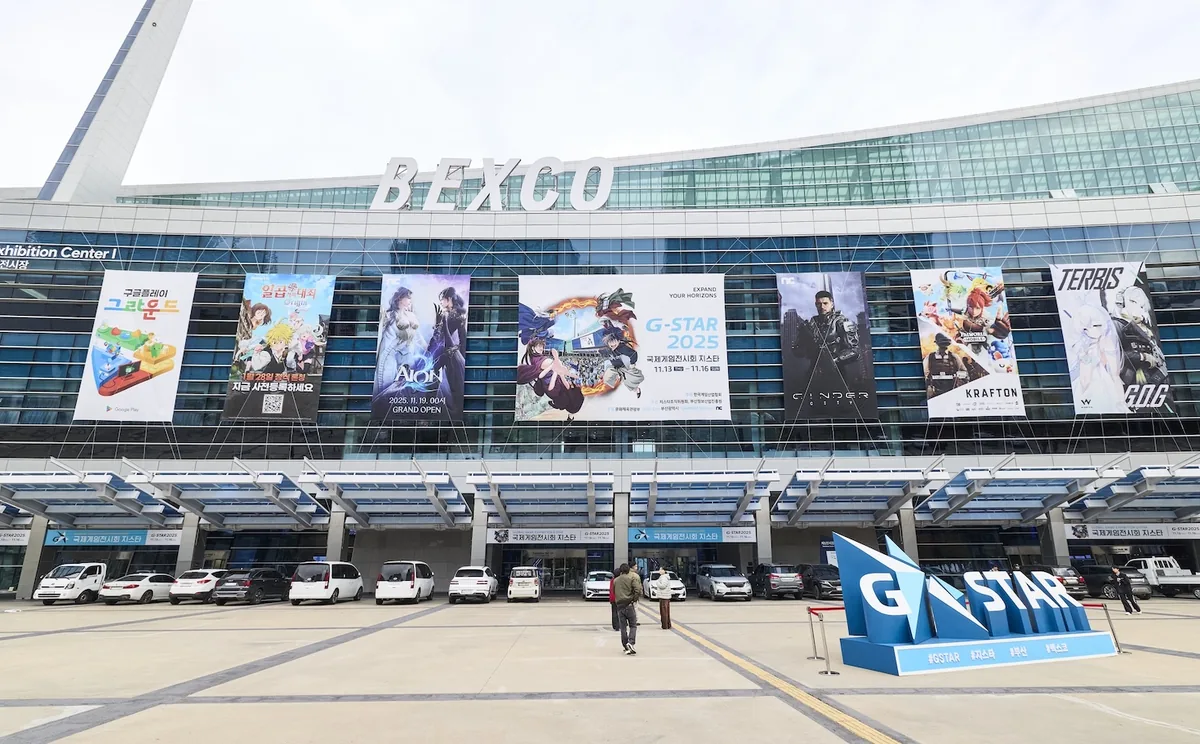
G-STAR 2026 runs from November 19–22 (B2C) and November 19–21 (B2B) at BEXCO, Busan, South Korea.
The Early Bird application period opens March 3, 2026 at 14:00 KST and closes April 30, 2026 at 17:00 KST. Regular applications run from May 26 to July 31, 2026.
The base cost is KRW 2,000,000 (approx. $1,300-$1,400 USD depending on exchange rates) per 3m × 3m booth unit, with a minimum of 2 units. Discounts of up to 30% are available by stacking Early Bird, returning exhibitor, and industry association benefits — applicable to up to 50 booth units.
Full refunds are available within 21 days of invoice issuance. After that, cancellation penalties range from 50% to 100% of the participation fee depending on timing.
Yes. G-STAR is an international exhibition and welcomes overseas participants. However, navigating the Korean-language application process, secretariat communications, and on-site operational requirements benefits significantly from local agency support.