Bilibili World 2026: A Strategic Guide for Game Exhibitors
April 23, 2026
Bilibili World 2026: A Strategic Guide for Game Exhibitors
Held every July in Shanghai, Bilibili World is one of China’s leading subculture game shows, drawing Gen Z visitors around gaming, animation, and fandom culture.
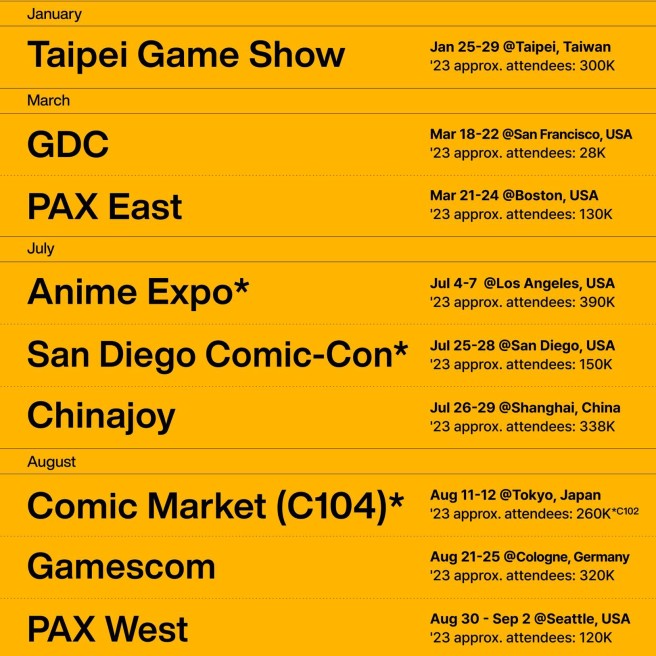
China’s game marketing landscape is shifting. For many years, ChinaJoy symbolized the center of China’s game exhibition scene. Today, more attention is moving toward Bilibili World.
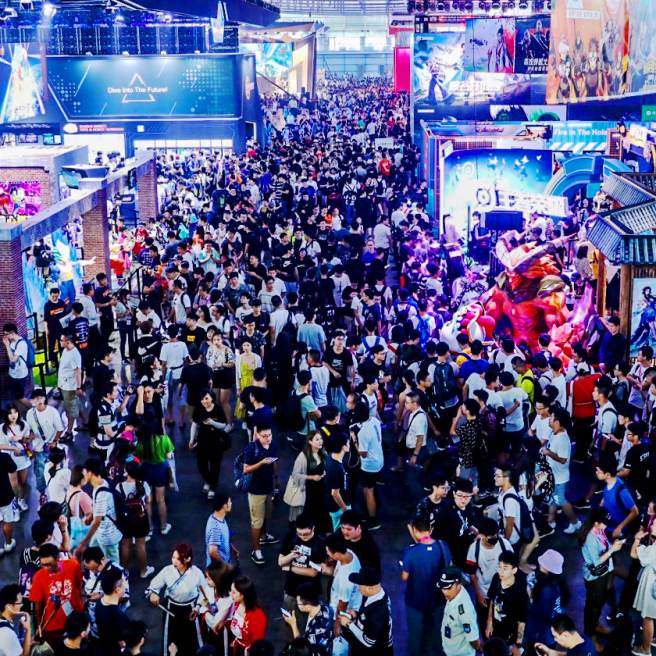
Launched in 2017, Bilibili World is still relatively young compared to longer-established events. Yet its growth has been rapid. The show drew around 250,000 visitors in 2024 and then jumped to 400,000 in 2025, showing how quickly it has grown within China’s Gen Z fandom and subculture audience.
Why Bilibili World Matters
Why Bilibili World Instead of ChinaJoy?
It all comes down to the audience and the unique nature of the event.
1. Concentrated Gen Z subculture fandom
If ChinaJoy is a broad, mainstream game show, Bilibili World is much more centered on subculture communities. It has a stronger festival-like atmosphere built around fandom, which makes it a more suitable space for strengthening IP loyalty among deeply engaged users.
Since the pandemic, many Korean game companies have shifted toward collectible RPGs and subculture-oriented titles. As a result, they have increasingly preferred events where highly engaged users gather, rather than relying only on broader mass audiences. For these brands, Bilibili World offers access to core users with stronger loyalty and higher spending intent.
2. Platform-driven viral reach
One of Bilibili World’s biggest strengths is its built-in online spread.
Because the event sits within the wider Bilibili platform, one of China’s largest video communities, cosplay content, stage events, fan videos, and creator posts can continue generating views after the show ends. This allows offline activation to connect naturally with online traffic.
That makes Bilibili World especially valuable from a marketing perspective, since the event does not stop at the exhibition floor.
3. A highly targeted strategy
There was a period when uncertainty around China’s game license environment made large-scale exhibition participation less attractive for some brands. Even after licensing resumed, many companies continued to favor a more focused approach.
Instead of spending on broader expos, they chose to concentrate on younger users who are more likely to spend time with a game and respond actively to its content. That helps explain why titles such as KRAFTON’s upcoming releases or Pearl Abyss’ Crimson Desert have appeared at Bilibili World. The event offers direct contact with one of the youngest and most active gaming audiences in China.
For global game companies looking at China, Bilibili World has become a major event that is increasingly difficult to overlook.
Bilibili World by the Numbers
The impact of Bilibili World becomes even clearer through recent event figures. The speed of ticket sell-outs alone shows how strong the audience loyalty has become.
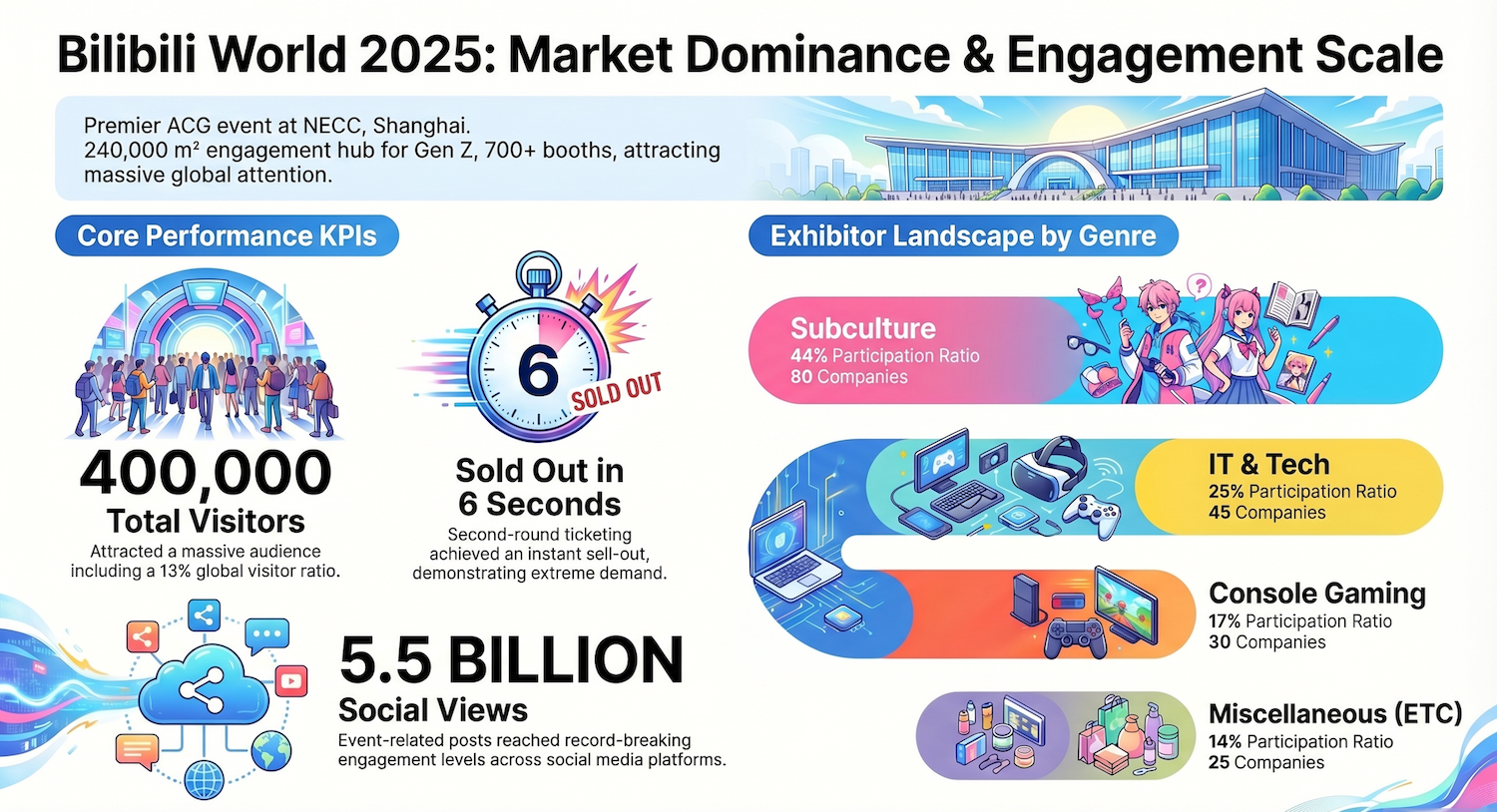
These figures suggest that Bilibili World works as more than an offline show. It also functions as a media platform that draws real-time reactions from online users across China.
| Category | Bilibili World Snapshot |
|---|---|
| Venue | National Exhibition and Convention Center (NECC), Shanghai |
| Scale | 240,000㎡ |
| Booth Count | 700+ booths |
| Ticket Sales | First-round tickets sold out in 35 seconds, second round in 6 seconds |
| Visitors | 400,000 |
| Global Visitor Share | Approximately 13% |
| Digital Reach | 5.5 billion views for #BW2025 posts |
| Streaming Exposure | 12 million concurrent viewers |
Large-scale game exhibitions require more than a strong booth concept. Use EIDETIC’s Booth Cost Estimator to calculate an initial planning range covering estimated booth rental, construction, and operational expenses.
Understanding the Audience
The main audience at Bilibili World is Gen Z, especially visitors in their late teens and early twenties. They account for a large share of the total audience.
For this group, games are not only a form of entertainment. They are also a cultural code through which identity, taste, and community are expressed. This is especially visible in audiences who are highly immersed in subculture IPs built around animation, characters, and worldbuilding.
At offline events, these visitors tend to place greater value on participation and ownership than on passive viewing alone.
Within this audience, visitors can be broadly divided into two groups: Hardcore Users and Casual Users. Each group responds to a different booth strategy and a different type of content structure.
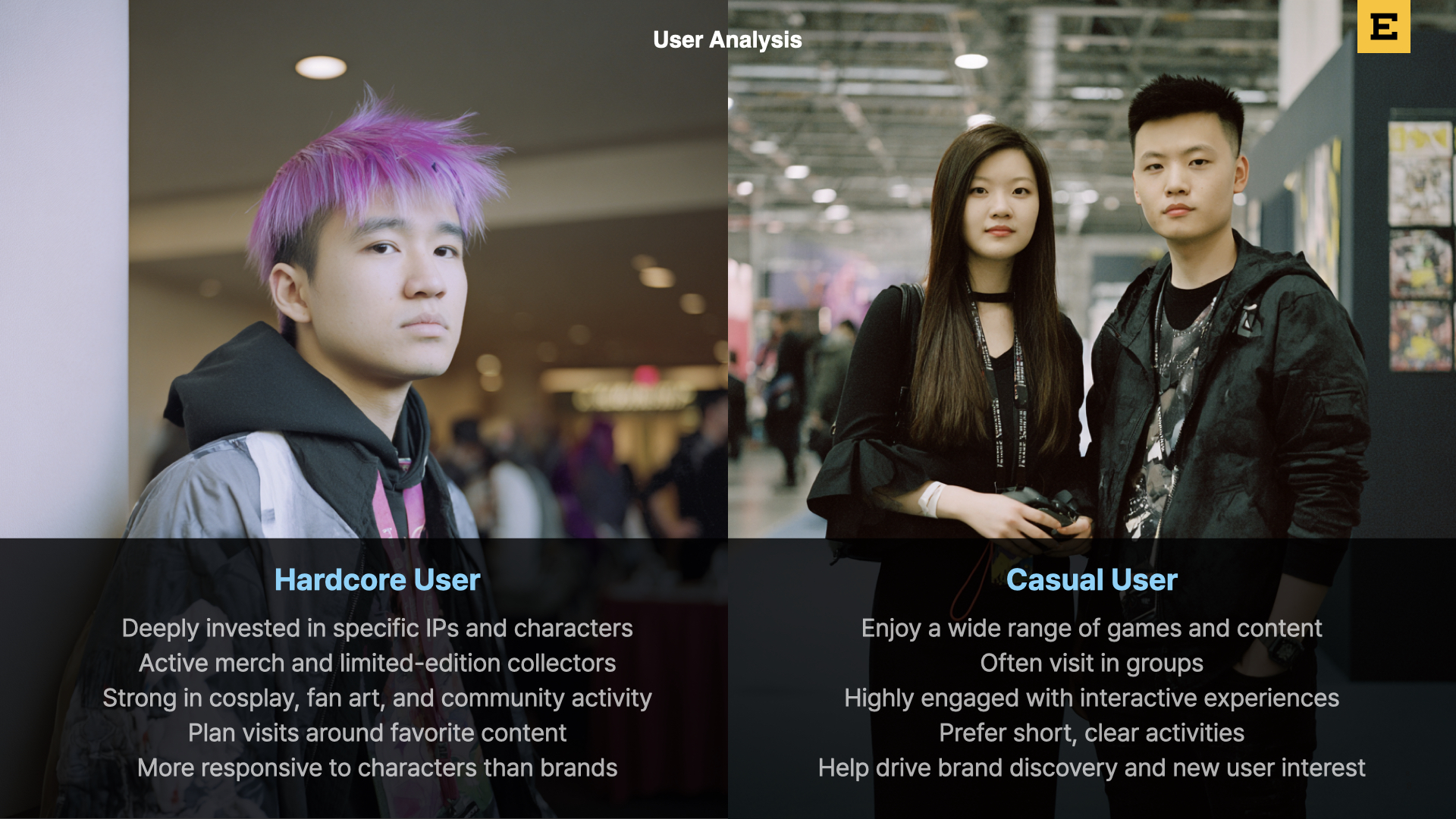
✔️Hardcore Users
Hardcore users are the core target for fandom building.
They actively search for game information even before the event begins. This group is more likely to join cosplay activities, participate in closed beta opportunities, and engage with official communities or fan-created content. Limited-edition merchandise and first-reveal content shown on site also tend to generate a strong response.
These users are often willing to wait longer and go through more complex participation steps if the reward feels meaningful.
Most importantly, they act as organic brand ambassadors, extending the event’s reach long after the doors close. For that reason, booth design for this audience should focus less on general brand awareness and more on deeper IP immersion.
✔️Casual Users
Casual users are important for broadening booth traffic.
They are less tied to a single genre and more open to exploring a wider range of games and content. At events, they care more about fun and immediate participation than about deep familiarity with one IP.
This means they tend to respond better to intuitive interactions than to complicated experience structures. They also show higher participation in social sharing activities and short-form event missions.
When it comes to rewards, they usually prefer fast participation and immediate results rather than long wait times. For this audience, mini-games, random merchandise draws, and social sharing missions can play an important role in increasing booth traffic and building on-site buzz.
Hall and Booth Strategy
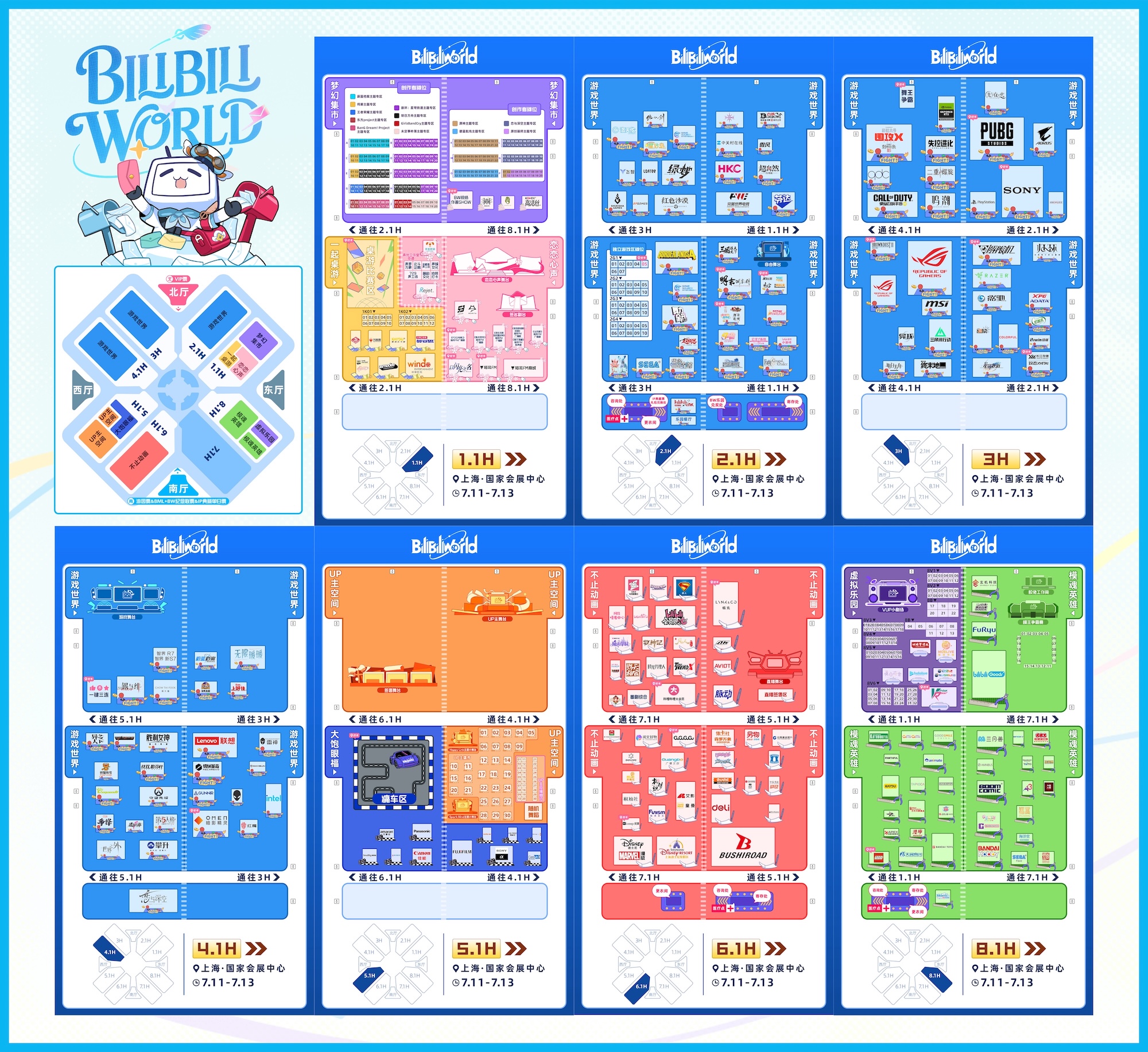
At Bilibili World, hall selection should be approached carefully. It is not only about booth size or visibility. It also involves hall character, neighboring brands, IP synergy, cosplay movement, and the structure of content spread within the venue.
For brands looking for deeper engagement with subculture fandom, Hall 2, Hall 3, and Hall 4 deserve close attention.
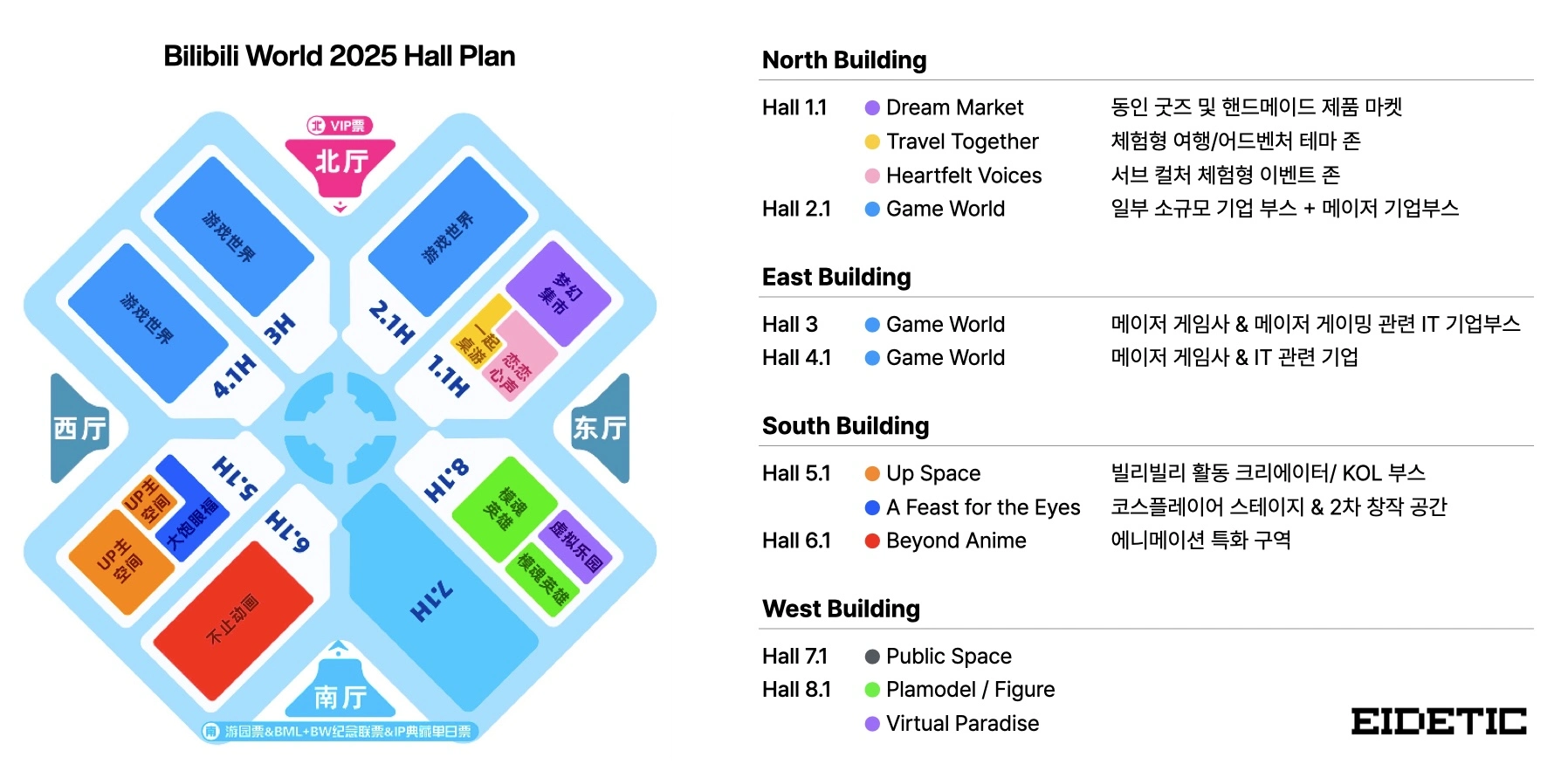
| Hall | Theme | Characteristics | Example Brands and IPs |
|---|---|---|---|
| 1.1 | Community and Long-tail | Focused on doujin goods and participatory events. Around half of the hall is dedicated to merchandise sales. | Individual creator booths, board games, subculture event zones, adventure-themed areas |
| 2.1 | AAA and Console | Smaller hall with major companies and premium titles | SEGA, Pearl Abyss’ Crimson Desert, Borderlands, Wuchang, Azur Lane |
| 3 | High-End IT Synergy | Strong synergy between major IT companies and high-spec game titles | BrownDust, PUBG, Call of Duty, Wuthering Waves, NVIDIA, SONY, MSI |
| 4.1 | Mobile and Popularity | Mid-sized IT brands and broadly popular mobile and FPS titles | Goddess of Victory: NIKKE, Overwatch 2, Blue Archive, Lenovo, Intel, Omen |
Bilibili World requires a different approach from more general game exhibitions. The following points should be considered together.
1. Hall position and audience density
Hall selection affects both traffic volume and audience fit. The goal is to choose a location where the surrounding visitors are more likely to match the game.
2. Adjacent IP synergy and cosplay flow
Nearby brands, neighboring IPs, and cosplay movement all influence the booth environment. These factors can shape how naturally visitors connect with the booth.
3. Content spread structure
At Bilibili World, booth planning is also linked to content spread. It is important to consider not only the booth itself, but also how the experience may continue through photos, videos, and fan sharing after the event.
We have executed major on-site activations for top-tier subculture titles like NIKKE and Stellar Blade, building fandom-centered event structures and on-site viral strategies. Our strength lies not only in booth operations, but also in designing fandom engagement and content spread as part of one integrated strategy.
For game companies preparing for Bilibili World, this can include hall selection strategy, audience analysis, experience content planning, creator and cosplay operations, on-site content production, and online amplification planning. As the event continues to grow, early decisions about where to exhibit, which audience to target, and what kind of experience to build can have a major impact on performance.
FAQ for Bilibili World Exhibitors
Bilibili World is typically held in July in Shanghai. The official dates for 2026 have not yet been announced. Based on previous years, the event generally runs over a weekend in mid-to-late July. Exhibitor applications typically open several months in advance.
ChinaJoy is China’s largest general game expo, drawing a broad mainstream audience across PC, mobile, and console. Bilibili World is a subculture-focused event with a more concentrated Gen Z fandom audience built around IP, animation, and community. ChinaJoy prioritizes scale and brand visibility; Bilibili World prioritizes fandom depth and content-driven spread. For titles with strong subculture communities, Bilibili World often delivers higher engagement per visitor than a larger but less targeted show.
More game brands are paying attention to Bilibili World because it brings together concentrated Gen Z fandom, strong subculture communities, and a platform environment that helps offline content spread online.
For brands preparing for Bilibili World, early planning matters. We help exhibitors shape that experience across booth strategy, fandom engagement, creator operations, and on-site execution.