Gamescom Merch Strategy: Giveaways and Quantities
May 14, 2026
Gamescom Merch Strategy: Giveaways and Quantities
At Gamescom, some booths attract attention the moment visitors walk by. Often, the reason is simple. People see other attendees carrying a branded item, wearing it, or talking about how they got it. That visibility creates curiosity fast. Good merch turns interest into action, helps a booth build momentum throughout the day, and gives exhibitors a practical way to guide traffic and participation.
3 Questions for Merch Planning
The most effective merchandise plans answer three questions early: who is this for, what do we want them to do, and what kind of item makes that action feel worth it?
At Gamescom, visitors sit at different stages of interest. Some walk past with no prior awareness. Some know the title and need one reason to engage. Others already want the full experience and will invest time to get it. Merchandise works best when each group gets a different kind of reward.
C-Level: Reach
Target: All passing visitors
Items: Can badges, photocards, antenna hairpins, carabiners
Goal: Drive booth entry at low cost per unit
C-level items work at the widest part of the funnel. These are the quick-grab pieces that help a booth stop people in motion and pull in broad traffic. Items like can badges, photocards, antenna hairpins, and carabiners work well because teams can distribute them at scale and keep the unit cost manageable.
At this stage, character appeal often works harder than logo exposure. A playful visual element moves through the halls faster than a branded wordmark alone. A cute hairpin, a collectible card, or a visually strong badge can travel across the venue as a walking signal for the game.

B-Level: Engagement
Target: Visitors who complete a light action (SNS follow, pre-registration, QR scan)
Items: Tarpaulin bags, string bags, lanyards, acrylic keyrings
Goal: Create walking brand exposure and capture social or lead actions
B-level items reward light interaction. This is where visitors complete a small action such as following a channel, joining a social mission, scanning a QR code, or finishing pre-registration steps. The reward should feel more valuable than a mass giveaway while still supporting volume.
Good examples include tarpaulin bags, string bags, lanyards, and acrylic keyrings. These items carry a strong visibility benefit because visitors continue using them throughout the day. A large bag, in particular, can function like a moving billboard on the show floor.

A-Level: Reward
Target: Visitors who complete a game demo or featured event
Items: Folding chairs, desk mats, T-shirts, portable chargers
Goal: Create the motivation to queue for 60–90 minutes
A-level items belong to the deepest part of the visitor journey. These rewards support actions that require real time and effort, such as finishing a game demo, joining an event, or waiting in line for a featured experience. At this stage, practicality and perceived value matter more. Folding chairs, desk mats, T-shirts, and power banks fit well because they feel substantial and memorable.
The strongest A-level rewards also reinforce ownership of the IP world. Visitors should feel that they earned access to something worth keeping. That feeling makes the wait feel productive and gives the brand a stronger emotional finish.

Case Study: Mecha BREAK
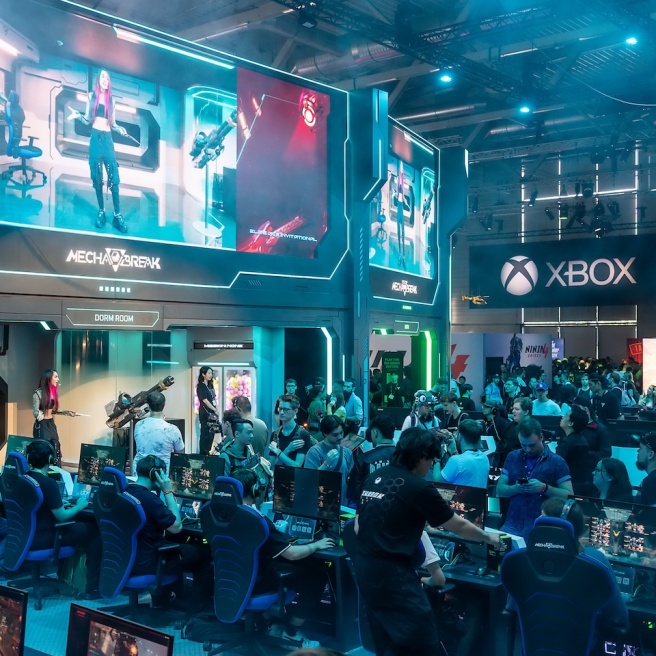
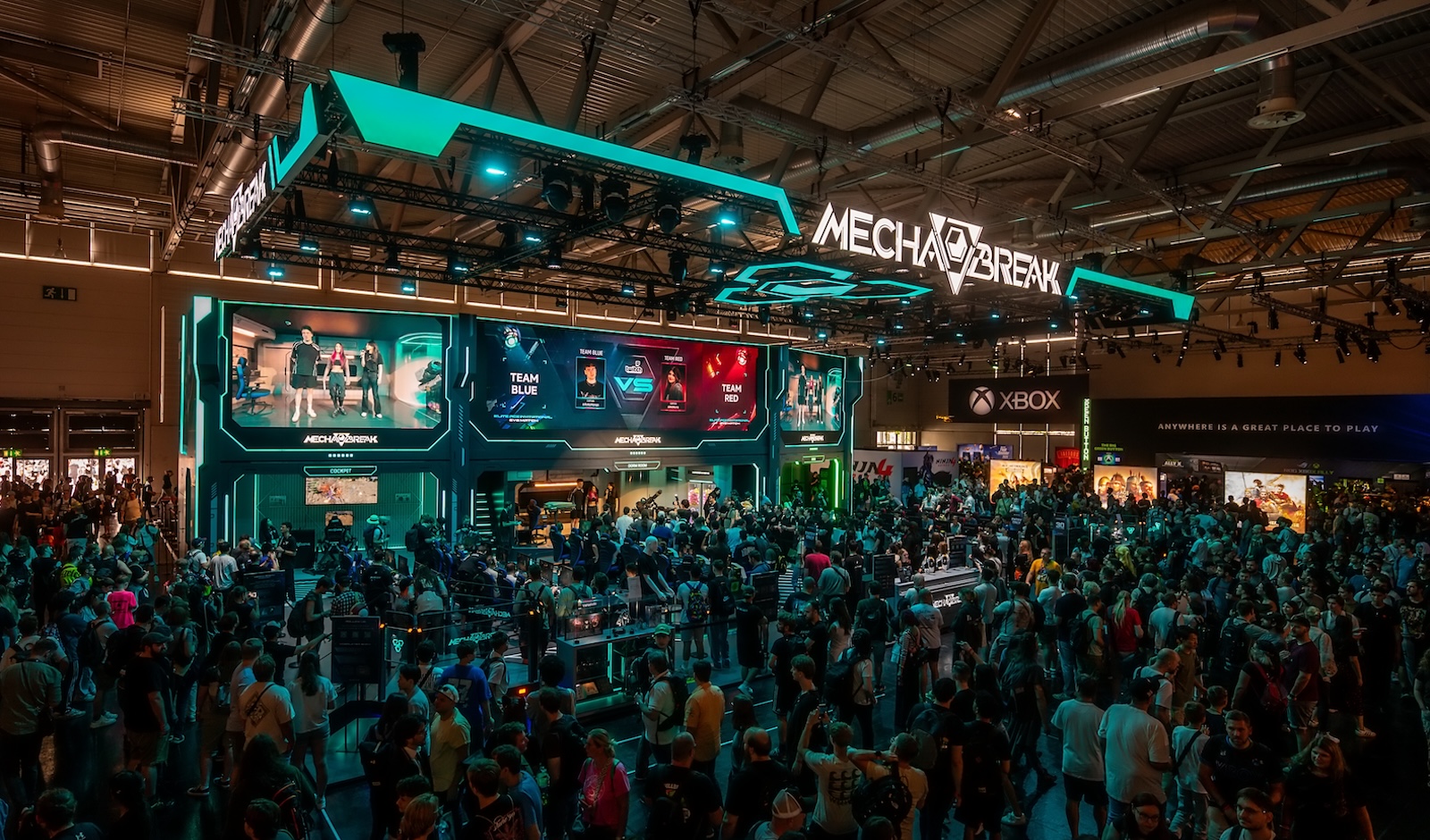
A successful merch strategy becomes much stronger when it connects with the game world itself. For Mecha BREAK at Gamescom, the objective went beyond handing out items. The focus was to extend the IP into an offline experience that people could see, hear, and record. You can see how EIDETIC approached the full booth experience in our Mecha BREAK Gamescom B2C case study. Instead of treating giveaways as separate from the booth activation, the planning tied merchandise to the event mechanic.
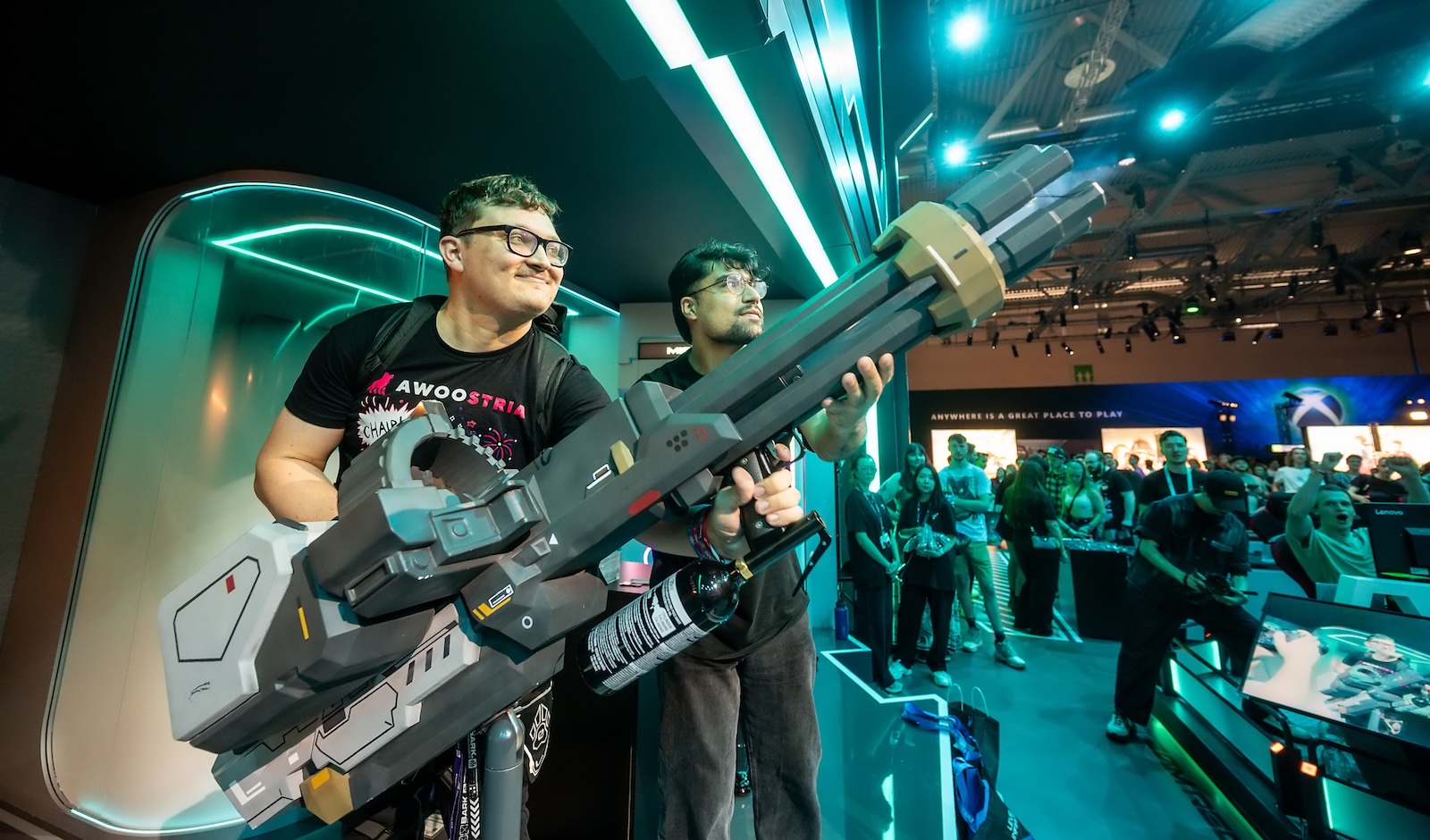
To reflect the weight and impact of the mech genre, the activation featured a gun-shaped object inspired by the world of the game. At set times, the booth used it to launch T-shirts into the crowd. The sound effect, the visual of the launch, and the timing of the event pulled attention from nearby aisles. Visitors began gathering before each round, and more phones came out the moment the shirts fired into the air.
That shift changed the role of the merchandise. The T-shirt remained a reward, yet the distribution method became content in its own right. Visitors captured the moment, shared it, and talked about the booth as the place where shirts were shot into the crowd. The giveaway became a spectacle, and the spectacle drove traffic.
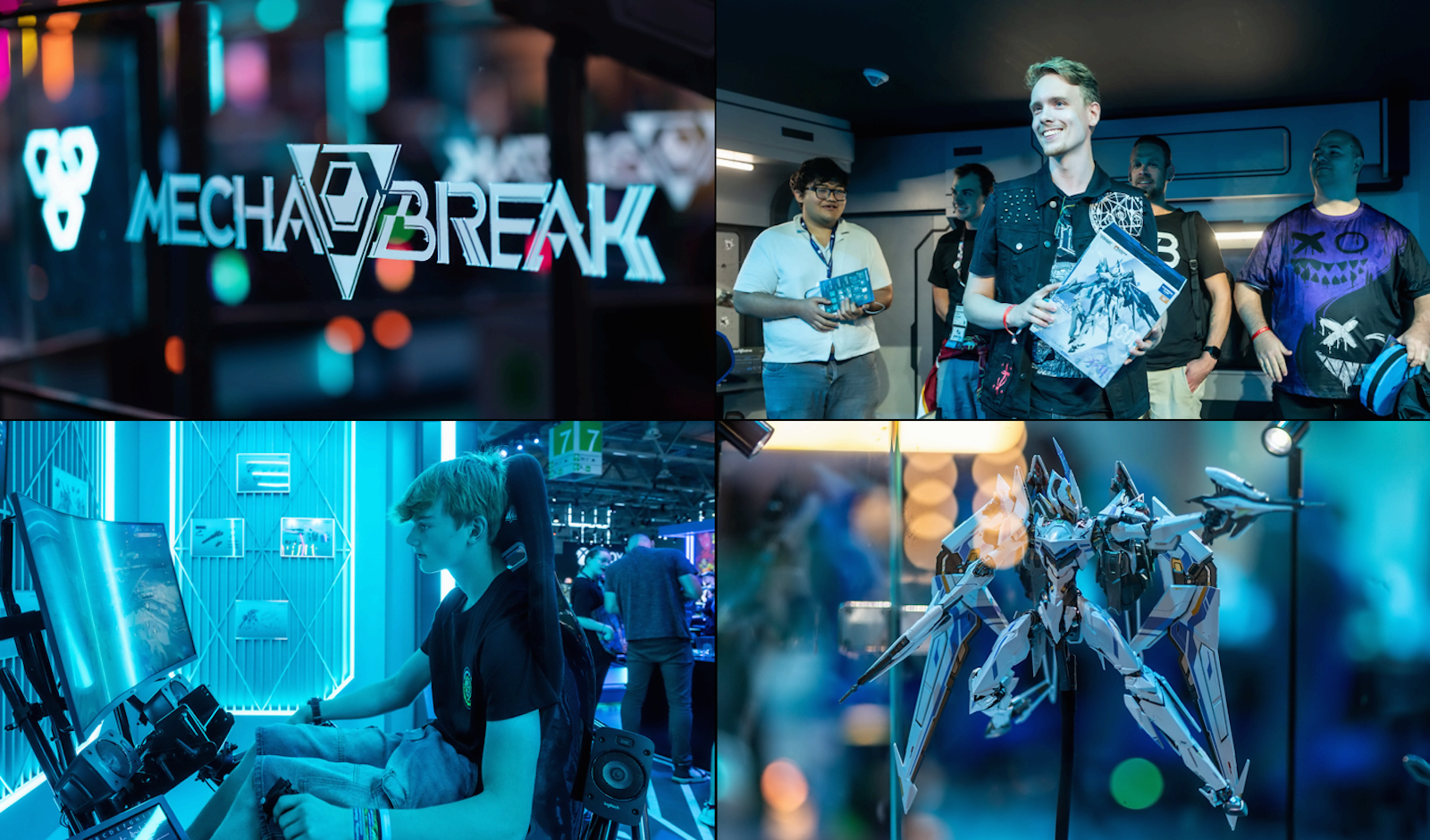
That is a useful lesson for any Gamescom merch strategy. When IP, worldbuilding, and event design work together, merch can become the trigger for booth energy rather than the final step after engagement.
Gamescom Merch Quantity Planning
One of the most common planning questions is also the most practical: how many items should a team actually prepare? Too few and you run out by day two. Too many and you pay to ship them home.
The right answer depends on booth scale, expected traffic, engagement design, and demo capacity. A quantity plan works best when teams separate broad-distribution items from action-based rewards. C-level items should align with expected booth visitors. B-level and A-level items should align with conversion targets and operating capacity. Once your giveaway tiers and quantity targets are clear, the next question is budget. Our Gamescom Booth Cost FAQ covers the major cost factors exhibitors should plan for.
Gamescom 2025 provides a useful benchmark. Organizers reported 357,000 total visitors, and the event ran from August 20 to August 24, with Wednesday including trade visitors and a limited number of private visitors in the entertainment area. That gives exhibitors a clear reference point for multi-day traffic planning.
C-Level Merch Quantity Planning
For C-level merch, the most practical approach is to estimate quantities based on booth traffic. Since these items are distributed broadly to visitors entering or approaching the booth, exhibitors can use booth size, awareness, location, and audience fit to build a working traffic forecast.
| Booth Size | Visit Rate | Visitors |
|---|---|---|
| Large booth – strong awareness + main traffic flow + headline title | 8–12% | 30,000–40,000 |
| Mid-size booth – defined fan base + strategic location | 5–8% | 20,000–30,000 |
| Small booth – indie title + indie hall | 2–5% | 15,000–20,000 |
C-level merch should generally follow this traffic-based estimate because these items are distributed to the broadest pool of booth visitors.
A-Level and B-Level Merch Quantity Planning
A-level and B-level merch need a different calculation. These items should be based on valid participants rather than total booth traffic. In practice, exhibitors should estimate them by considering experience time, operating hours, and the number of seats or devices available for demos, missions, or event participation.

Based on EIDETIC’s hands-on Gamescom operating experience, a useful working benchmark is to estimate B-level engagement at around 40 to 50 percent of booth visitors, while A-level playtest participation often falls around 20 to 30 percent, depending on device count and demo duration.
| Metric | Rate | KPI |
|---|---|---|
| Booth Visitors | Mid-size booth benchmark | 20,000+ |
| SNS Engagement – B Level | 45% | 9,000+ |
| Playtest Participants – A Level | 20% (may vary depending on device count and demo duration) |
4,000+ |

Merch Sales Rules
For exhibitors considering on-site sales, Gamescom allows merchandise sales under specific conditions. For a full breakdown of booth sales eligibility, Hall 5, and booth zoning, see our Gamescom Merchandise Rules FAQ. In principle, merchandise sales concentrate in Hall 5, the Merchandise Area. Sales inside an exhibitor booth in the B2C Entertainment Area become possible when all three conditions are met:
- • The booth is 600 square meters or larger
- • The merchandise is based on the exhibitor’s own IP
- • The sales zone occupies no more than 30 percent of the total booth area and stays visually integrated with the overall booth design
That matters strategically because merchandise can support two goals at once. It can expand the fan experience, and it can create a revenue opportunity inside the same branded environment. When teams plan that zone with care, the sales area becomes part of the IP story and part of the booth journey.

There’s More to Merch Strategy
When exhibitors build a merch strategy for Gamescom, the real questions go far beyond item selection.
- Which payment system makes the purchase flow easiest for international visitors?
- Is local production the better choice, or does overseas production offer more control?
- How should merch distribution change by booth traffic, event timing, or final-day inventory?
FAQ
Start with booth traffic for broad giveaways, then use engagement and participation targets for higher-tier rewards. C-level items should follow expected total visitors. B-level items should follow mission or social conversion targets — typically 40 to 50 percent of booth visitors. A-level items should follow demo or event throughput capacity. Gamescom 2025 drew 357,000 visitors overall, so even a modest booth can see meaningful volume across the full five-day event.
The best merchandise matches the visitor action you want to drive. Small, visual items work well for reach — character-based designs outperform logo-only items consistently. Bags, lanyards, and keyrings work well for light engagement because visitors keep using them across the halls. Higher-value, practical items work best for demo completion and longer waits. Strong results usually come from tiered planning rather than one universal giveaway.
Yes, under defined conditions. Booth sales in the B2C Entertainment Area require a booth of at least 600 square meters, merchandise based on the exhibitor’s own IP, and a sales zone that uses no more than 30 percent of the booth area while staying visually integrated with the overall booth design. Merchandise sales also concentrate in Hall 5, the dedicated Merchandise Area, which is open to all exhibitor categories.
A strong Gamescom merch strategy brings together IP storytelling, quantity planning, and on-site execution. EIDETIC supports global game brands with booth strategy, production, and Gamescom planning from concept to close of show.