Gamescom Booth Catering: Rules, Vendors, and Strategy
April 17, 2026
Gamescom Booth Catering: Rules, Vendors, and Strategy
At Gamescom, visitors make fast decisions about where to stop and how long to stay. Gamescom booth catering is one of the more underused tools exhibitors can use to influence both.
Food and beverages at a booth do more than support hospitality. In the right format, they can increase dwell time, create photo-ready moments, and add a stronger sensory layer to the brand experience. At the same time, F&B at Gamescom requires careful planning. Food safety compliance, vendor coordination, and booth flow all need to work together on site.
This guide covers what exhibitors can serve, which regulations apply, how external vendors work, and what makes a catering program worth running. If you’re still in the early stages of planning, our Gamescom 2026 exhibitor guide covers the full event overview.
What Counts as Catering at Gamescom
Exhibitors in the B2C hall can serve food and beverages at their booth. There is no blanket restriction on refreshments, but the format, compliance obligations, and operational setup all require advance planning.
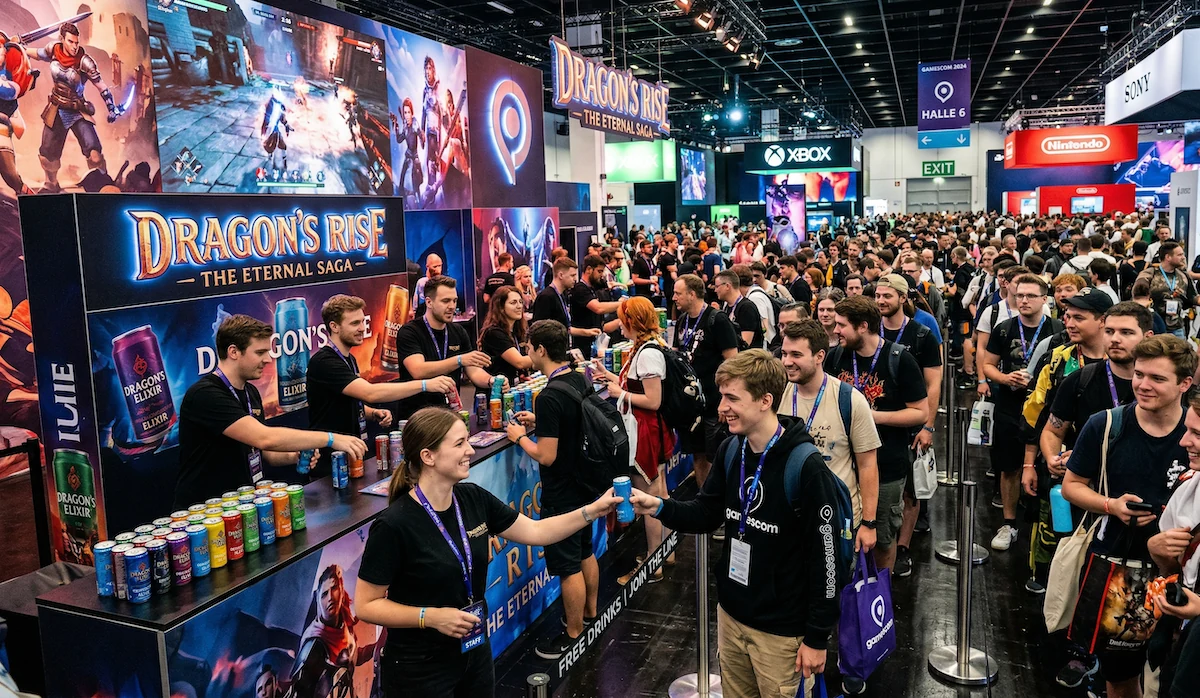
Snacks, finger foods, branded drinks, and themed F&B tied to the game world are all viable options. Alcohol can also be served, but age verification requirements remain the responsibility of the exhibitor rather than the venue.
The strongest catering programs treat food and beverage as part of the IP experience, not just as an added hospitality service. A drink named after a character, a snack shaped around an in-game item, or packaging designed to match the booth aesthetic can all make the experience more memorable and more shareable.
EIDETIC ran catering operations for BMW’s Gamescom opening party in the entertainment area, designing a full-service F&B program that matched the event tone and met local compliance standards from the start.


Food Regulations for Exhibitors
Compliance responsibility sits with the exhibitor, not with Koelnmesse or the catering vendor. That makes pre-event review of menus, labels, and vendor credentials essential. For a broader look at booth rules, see our Gamescom 2026 booth application guide.
| Regulation | Key Requirement | Practical Note |
|---|---|---|
| LMHV | Food hygiene standards for storage, preparation, and service | Staff handling food should hold a hygiene certificate |
| EU Reg. 1169/2011 | Allergen labeling for all 14 major allergens | Display prominently at point of service |
| GMO Regulation | Disclosure if GMO-derived ingredients are present | Check ingredient sourcing before the event |
| Additive Regulation | Label any regulated additives in food or drink | Applies to themed drinks and packaged snacks |
| Jugendschutzgesetz | Age restrictions for alcohol service | 16+ for beer and wine, 18+ for spirits |
Working with External Catering Vendors
Gamescom has official catering partners for the venue, and Aramark is the primary operator for public food service areas across the halls. For many exhibitors, that serves as a practical starting point for booth catering.

External vendors outside the official network can also be used. Exhibitors may work with a local catering company or specialist provider, as long as the vendor meets German food safety standards and the exhibitor takes responsibility for compliance.
When selecting an external vendor, three points matter most:
- • Local experience: Vendors with German trade show experience are more likely to understand LMHV requirements, hold the right certifications, and work smoothly in a high-traffic hall environment.
- • Operational fit: Booth catering depends on more than the menu. Cold-chain handling, daily restocking, back-of-house storage, and service flow all need to support the activation.
- • Clear responsibility: Since compliance remains with the exhibitor, contracts should clearly define who handles allergen labeling, staff certification, and incident response.
For themed or IP-specific menus, it also helps to brief the vendor early and treat food and beverage planning as part of the creative process. The strongest Gamescom catering programs usually start with a clear understanding of the game world, the booth objective, and the on-site environment before the menu is finalized.
F&B as a Brand Experience Tool
At Gamescom, catering performs best when it is designed around timing, context, and booth flow rather than volume alone. The most effective booths treat F&B as a deliberate part of the activation, not as a last-minute add-on.
1. Plan Service Timing Carefully
Spreading F&B service across the full day often creates more effort than value. In most cases, a timing-based approach works better because it concentrates service around the moments that matter most:
- Right after the hall opens, when first-movers help shape the social tone of the day
- Before main programming or demo sessions begin
- During influencer and media visit windows
- At the natural visitor peak in the early afternoon
A limited-quantity format can also create visible interest and a stronger sense of timing. When handled well, it turns catering into a participation cue rather than a passive refreshment offer.
2. Build Menus for Social Visibility
A standard refreshment may serve a practical purpose, but an IP-based menu item is more likely to generate photos, sharing, and stronger brand recall.
Character-branded cups and straws, game item motif desserts, limited-edition packaged snacks, and menu items tied to a photo zone can all create moments worth sharing. In that context, catering functions as part of the content experience as well as the booth experience.

Overwatch’s Busan-concept free beverage program at Gamescom is a useful example. The drinks translated the in-game world into a physical, shareable format, and the booth gained visibility well beyond the immediate footprint of the activation.
3. Align F&B with Booth Flow
Where food is served matters as much as what is served. F&B placement should not block the demo queue or create congestion that works against the activation. The goal is to position catering so it connects naturally with the product experience zone and supports the intended booth journey.
In that context, catering works best when it supports dwell time and extends the booth journey rather than functioning as a separate food stop. When service is positioned at the end of a demo, tied to an event trigger, or integrated into a photo zone, it becomes part of the experience design.

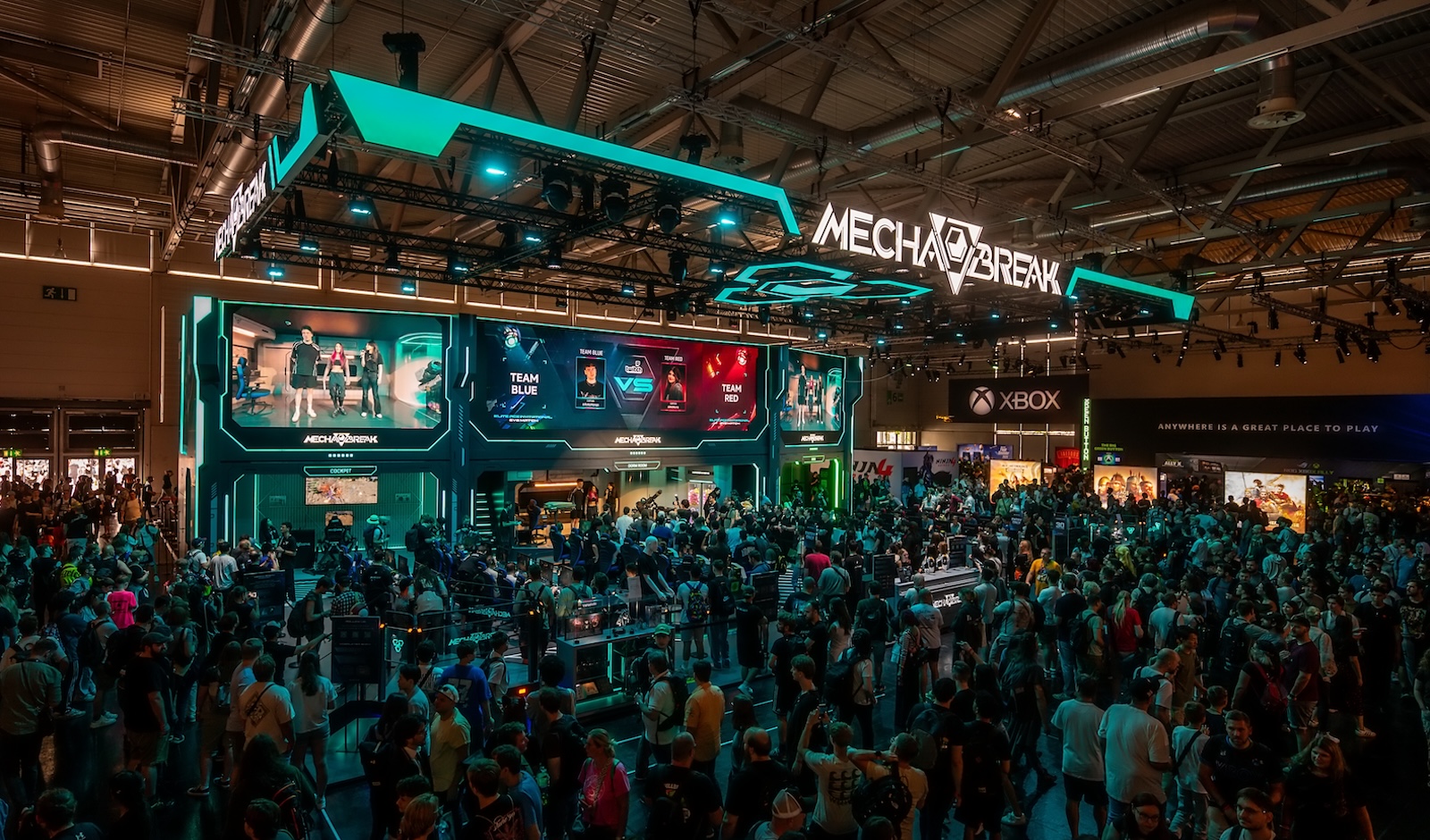
EIDETIC’s work at Gamescom 2025, including MechaBreak and Kakao Games, applied this approach across booth experience strategy, service timing, and spatial flow. Each activation was planned as an integrated brief from the start.
FAQ for Gamescom Booth Catering
Yes. Exhibitors in the B2C hall can serve food and beverages, including snacks, branded drinks, themed F&B, and alcohol. Alcohol service requires age verification under German law, and allergen labeling is required for all items served.
The main frameworks are LMHV (German food hygiene), EU Regulation 1169/2011 (allergen labeling), GMO and additive labeling rules, and the Jugendschutzgesetz for alcohol. The exhibiting company is responsible for compliance, not the event organizer or the catering vendor.
Yes. Vendors outside Gamescom’s official partner network are permitted. The exhibitor retains full liability for regulatory compliance, so vendor selection should include a review of hygiene certification, event experience, and allergen management.
Start with the activation strategy, not the menu. Identify the moments in the booth journey where F&B can deepen engagement: the wait before a demo, the end of a playtest, the peak window when influencers are on the floor. Then build the menu around the IP and design the service flow so it draws visitors through the booth rather than stopping them at the entrance.
For global exhibitors, Gamescom catering works best when it is planned as part of the booth strategy from the beginning. Menu design, compliance review, service timing, and visitor flow all shape how the experience performs on site.
For brands preparing for Gamescom, catering is most effective when it is built into the booth journey early. EIDETIC helps exhibitors plan that experience across concept, operations, and on-site delivery.