BRIEF US!
Design illuminating activations around the world with us.

THANK YOU FOR YOUR REQUEST
Thank you very much for your interest in EIDETIC MARKETING.
We look forward to working with you.
We will contact you soon.Thanks Again.

THERE WAS A PROBLEM WITH YOUR SUBMISSION.
Have you checked all the required fields?
We want you to write your Company, Name, E-mail, Budget, Country to Execute, Website URL, Wanted Services and Project Description.Thanks.

Tag Archives: experience marketing agency in Asia
Tokyo Game Show 2025: Exploring The Most Popular Booths
October 7, 2025
Tokyo Game Show 2025
Exploring The Most Popular Booths
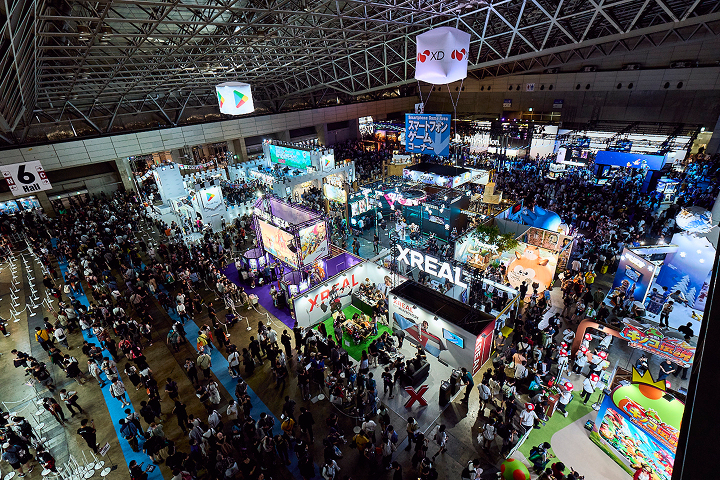
The Tokyo Game Show 2025 closed its four-day run at Makuhari Messe with over 263,000 visitors. Beyond sheer scale, this year’s show was defined by how major publishers transformed their booths into living brand experiences—a shift from spectacle to strategy.
If you missed our first coverage on booth trends and overall highlights, read it here: Tokyo Game Show 2025: Big Booth Highlights.
Here’s how each Tokyo Game Show popular booth earned the spotlight.
Square Enix
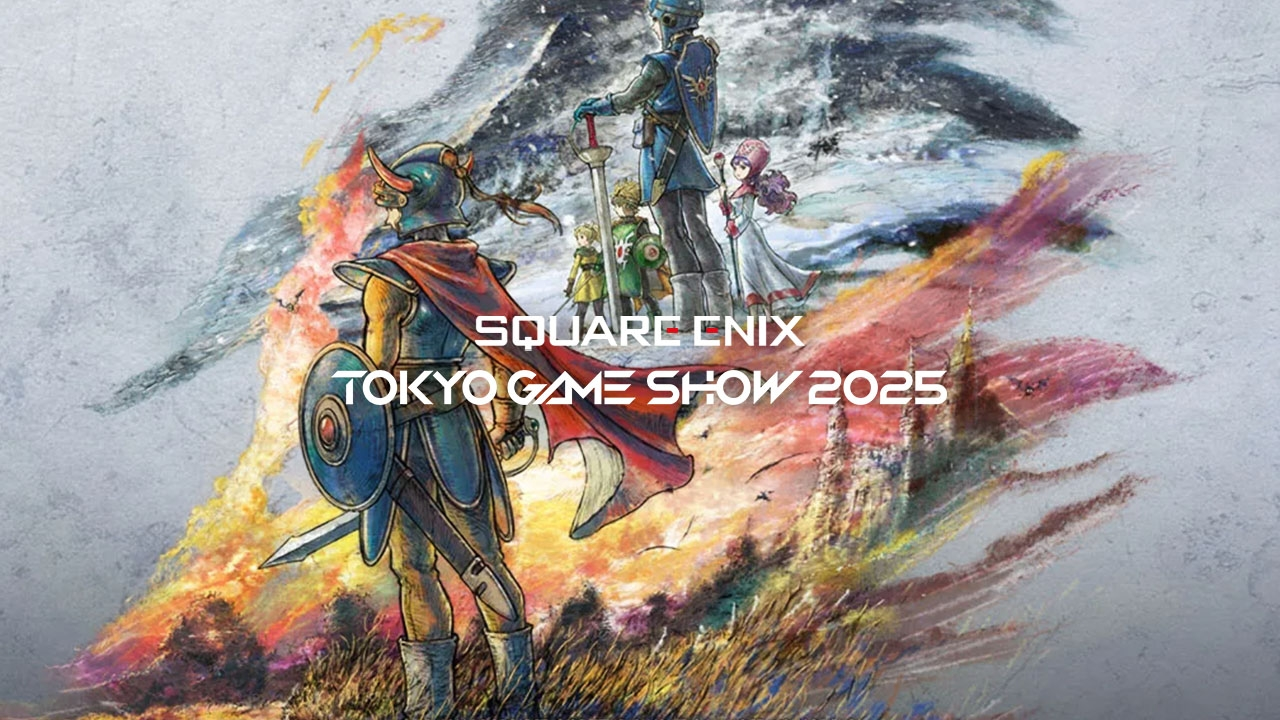
Square Enix’s booth at Hall 3 – S02 was designed as a multi-sensory stage experience rather than a static showcase. Every major title—from Dragon Quest I & II HD-2D Remake to Final Fantasy VII Remake Intergrade and Final Fantasy XIV Online—had its own interactive zone, blending physical rewards, fan engagement, and live broadcasts.
Highlights:
- ✔️ Dragon Quest I & II HD-2D Remake: 15-minute demo + limited-edition drink giveaway + life-size Dragonlord photo zone.
- ✔️ Final Fantasy VII Remake Intergrade: Magic: The Gathering crossover photo wall + collectible card cases.
- ✔️ Final Fantasy XIV Online: Mascot meet-and-greet + social media-linked campaigns (Instagram, KakaoTalk, Bluesky).
- ✔️ Final Fantasy Tactics: The Ivalice Chronicle and Octopath Traveler 0: Developer Q&A sessions, voice actor appearances, and live streaming.
Square Enix emphasized hybrid experiences—real-time livestreams, influencer-hosted talks, and on-site giveaways—that deepened both digital and physical participation.
Capcom
Few publishers understood fan psychology as well as Capcom. Its Hall 7 – S02 booth became a magnet for players eager to test next-gen titles hands-on. It hosted full-scale demo zones for Monster Hunter Outlanders, Monster Hunter Stories 3, and Monster Hunter Wilds, playable across PS5, Switch 2, and mobile. Visitors received limited-edition Monster Hunter gear, with additional prizes through the #MHWilds Instagram challenge.
The booth also featured Pragmata and Onimusha: The Path of Blades, with developer Q&A streams and exclusive art exhibitions. Resident Evil Requiem and Survival Unit transformed the space into horror-themed VR environments with survival challenges and live mission events. Street Fighter 6 drew massive crowds for live tournaments and influencer-led battles.
SEGA / ATLUS
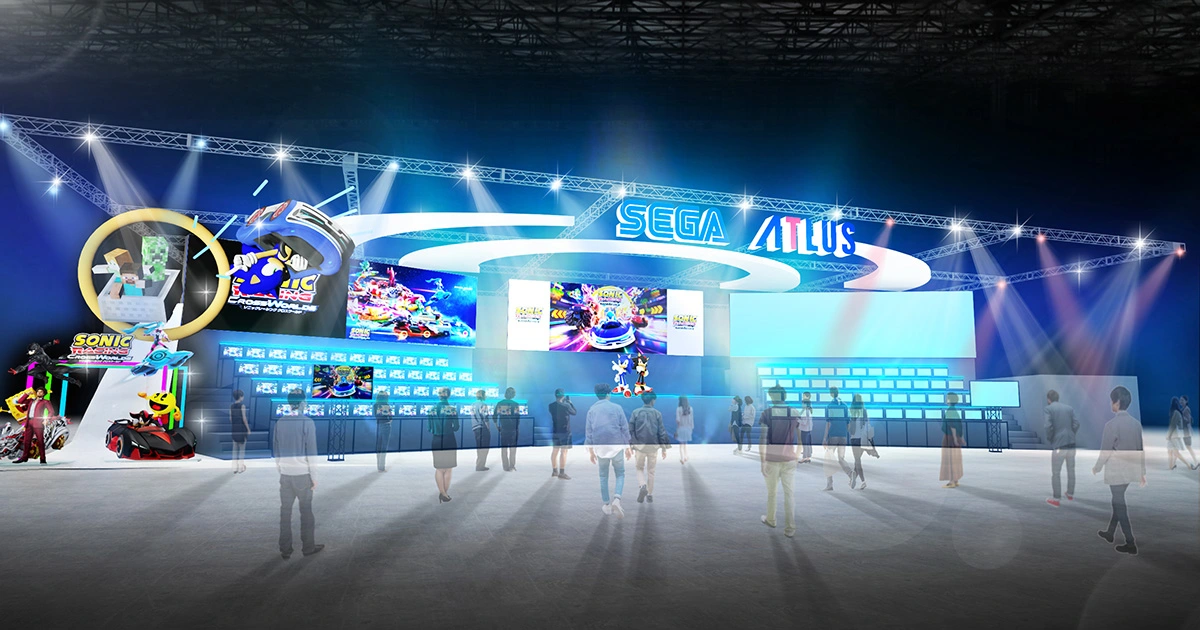
SEGA/ATLUS embraced nostalgia and energy at Hall 4 – N06, turning gameplay into performance and fans into part of the show. The booth layout felt like a theme park—part racing circuit, part arcade, part fan stage.
Highlights:
- ✔️ Sonic Racing CrossWorlds: Life-size F1 car + leaderboard challenge with instant prizes.
- ✔️ Virtua Fighter R.E.V.O.: eSports Park collaboration with live influencer commentary.
- ✔️ Persona 3 Reload: AR/VR dungeon experience + café coupon rewards + fan art and merchandise zone.
With the “Fun Time Show” panel, SEGA turned influencers and cosplayers into content hosts, encouraging audience participation and real-time engagement.
Bandai Namco
Located in Hall 6 – N06, Bandai Namco focused on immersive storytelling over size. Four major IPs—Code Vein II, Digimon Story: Time Stranger, Little Nightmares III, and Once Upon a Katamari—each had distinct narrative-driven zones.
From Little Nightmares III’s atmospheric cosplay photo contest to Once Upon a Katamari’s giant playable sculpture, every corner encouraged interaction. The Family Game Park & Tamagotchi Plaza invited families to experience casual and educational titles together, reinforcing inclusivity as part of Bandai’s identity.
Konami
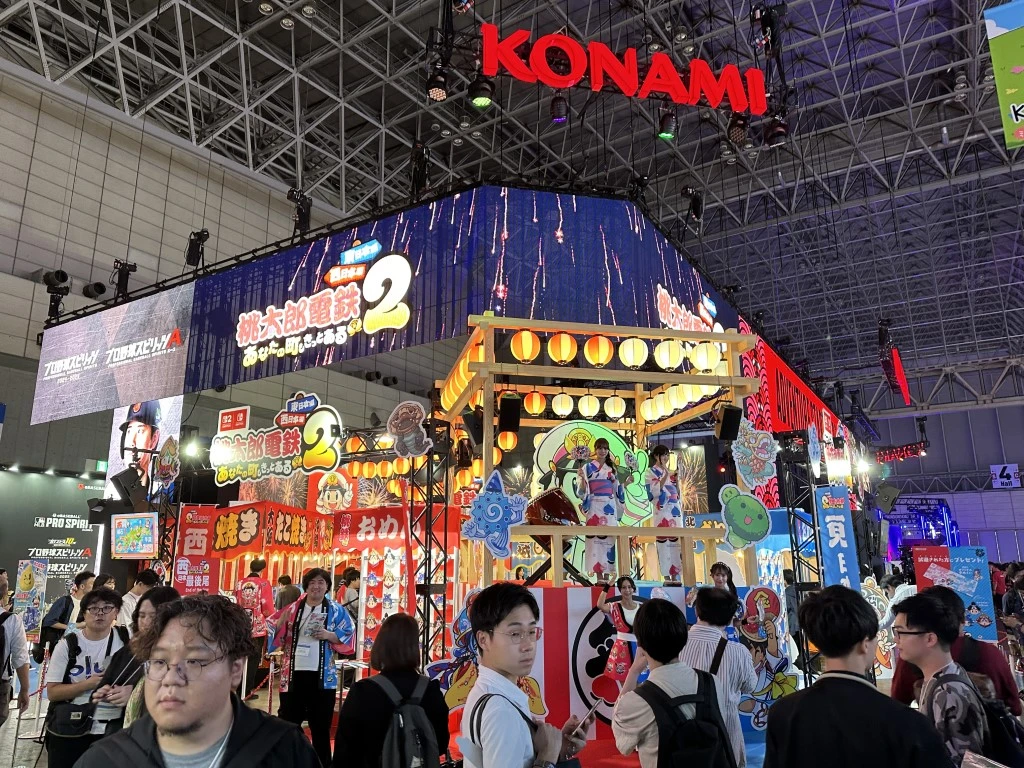
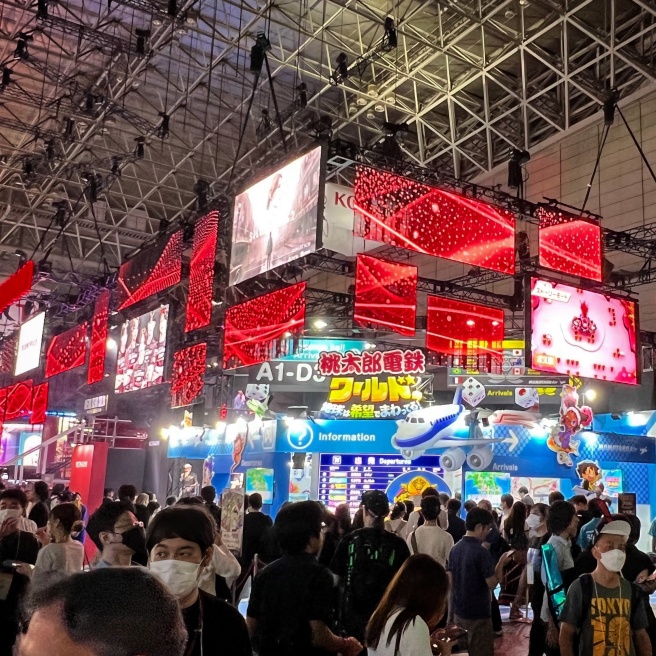
Konami’s expansive booth at Hall 5 – S01 offered over 40 playable titles, from Metal Gear Solid Δ: Snake Eater and Silent Hill f to Momotaro Dentetsu 2 and Suikoden Star Leap.
Each major title had its own stage program: Metal Gear Production Hotline with the dev team, Silent Hill Live Commentary with 2BRO., and esports finals for eBASEBALL Power Pros. The space also included VR Idol showcases, live DJ sessions, and the Indie Student Challenge awards ceremony.
Sony Interactive Entertainment
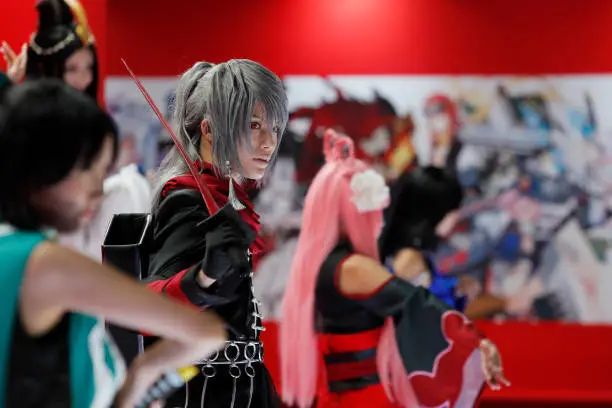
At Hall 4 – S01, Sony presented itself not as a game publisher but as a platform experience curator. The booth emphasized Ghost of Yōtei, MARVEL Tokon: Fighting Souls, and Astro Bot, each tailored to distinct audiences.
Highlights:
- ✔️ Ghost of Yōtei: 30-minute demo and live developer Q&A.
- ✔️ MARVEL Tokon: Fighting Souls: Pro-gamer battles + cosplay photo stage + livestreamed stage show.
- ✔️ Astro Bot: Family-focused AR mini-games and stamp tours with collectible figures.
Sony also celebrated PlayStation’s 30th anniversary with a YOASOBI collaboration—Project: Memory Card—featuring limited-edition art and giveaways. PlayStation Plus members enjoyed exclusive pre-booked demos and merchandise kits.
Tokyo Game Show Marketing Agency
Over the past few years, Tokyo Game Show has evolved into Asia’s answer to Gamescom—a hub where global publishers, developers, and creators converge to enter or expand across Asian markets.
The surge in exhibitor participation and media attention shows that TGS is now the fastest-growing global gaming exhibition, perfectly positioned as the gateway to Asia’s players and partners.
At Eidetic Marketing, we help brands turn this momentum into measurable impact.
From booth concept and design to full-scale execution and on-site management, our team bridges creativity and precision to deliver experiences that move audiences and elevate brand presence.
If your goal is to make a statement at Tokyo Game Show 2026, we’re here to help you craft a booth that connects, converts, and captivates.
Sources
On-site analysis and reporting by Eidetic Marketing
Gematsu — Capcom TGS 2025 lineup announcement
Tokyo Game Show 2025 Official Site
GamerBraves — Event overview and exhibitor coverage
Frontline Japan — Image references and booth visuals
GamerBraves — Event overview and exhibitor coverage
TGS 2025 Exhibitor Alert: New Regulations & Booth Rules
March 30, 2025
TGS 2025 Exhibitor Alert: New Regulations & Booth Rules
Tokyo Game Show (TGS), one of the world’s top three game exhibitions and Asia’s largest, has officially opened registration for 2025.
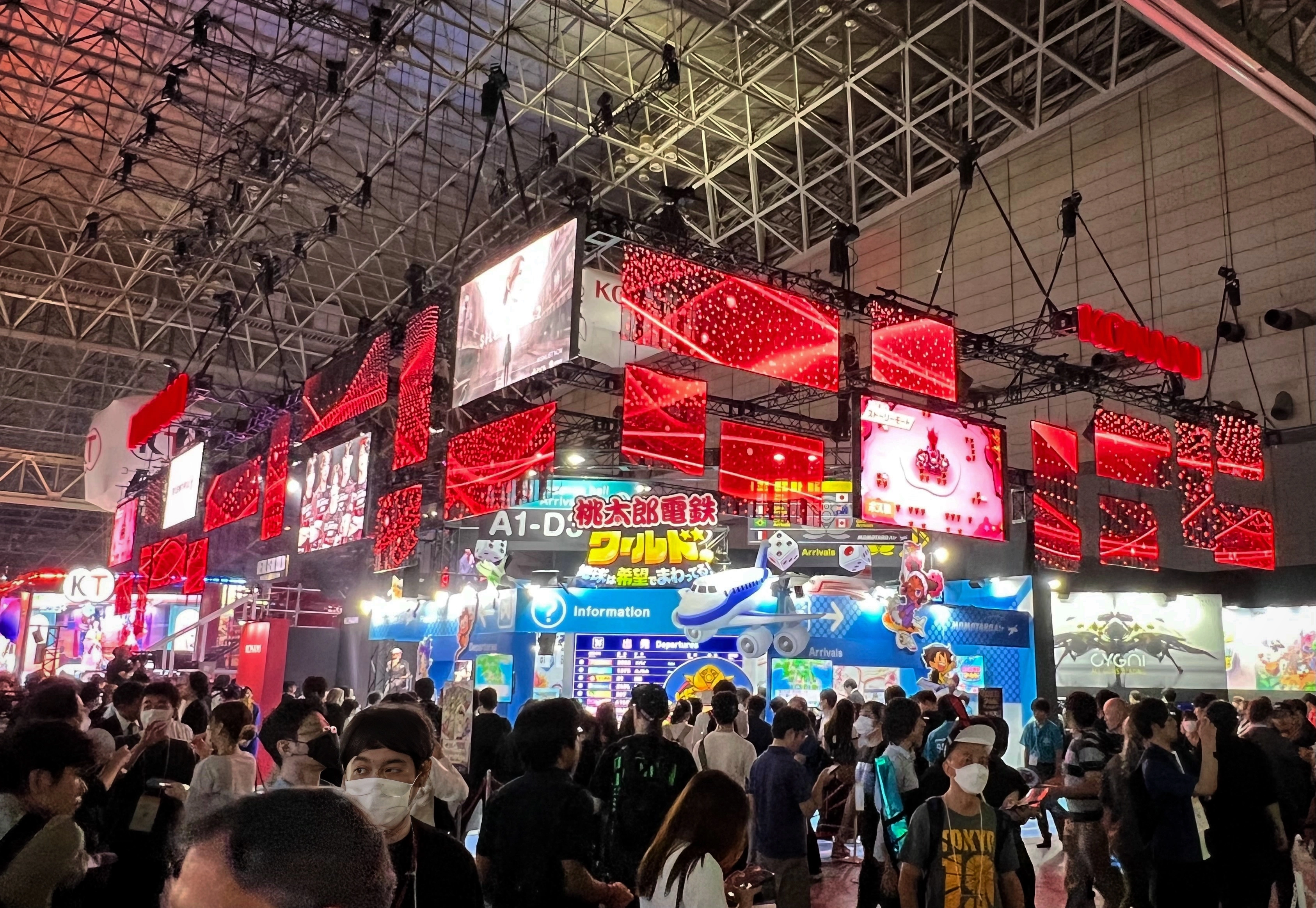
In 2024, for the first time ever, overseas exhibitors outnumbered domestic Japanese companies. (535 overseas vs. 450 Japanese). As international participation grows, the organizers are placing greater focus on globalization. In this guide, we’ll share the latest updates and essential information to help you prepare for a successful TGS 2025 exhibition.
Why Japan Is a Prime Market for Games?
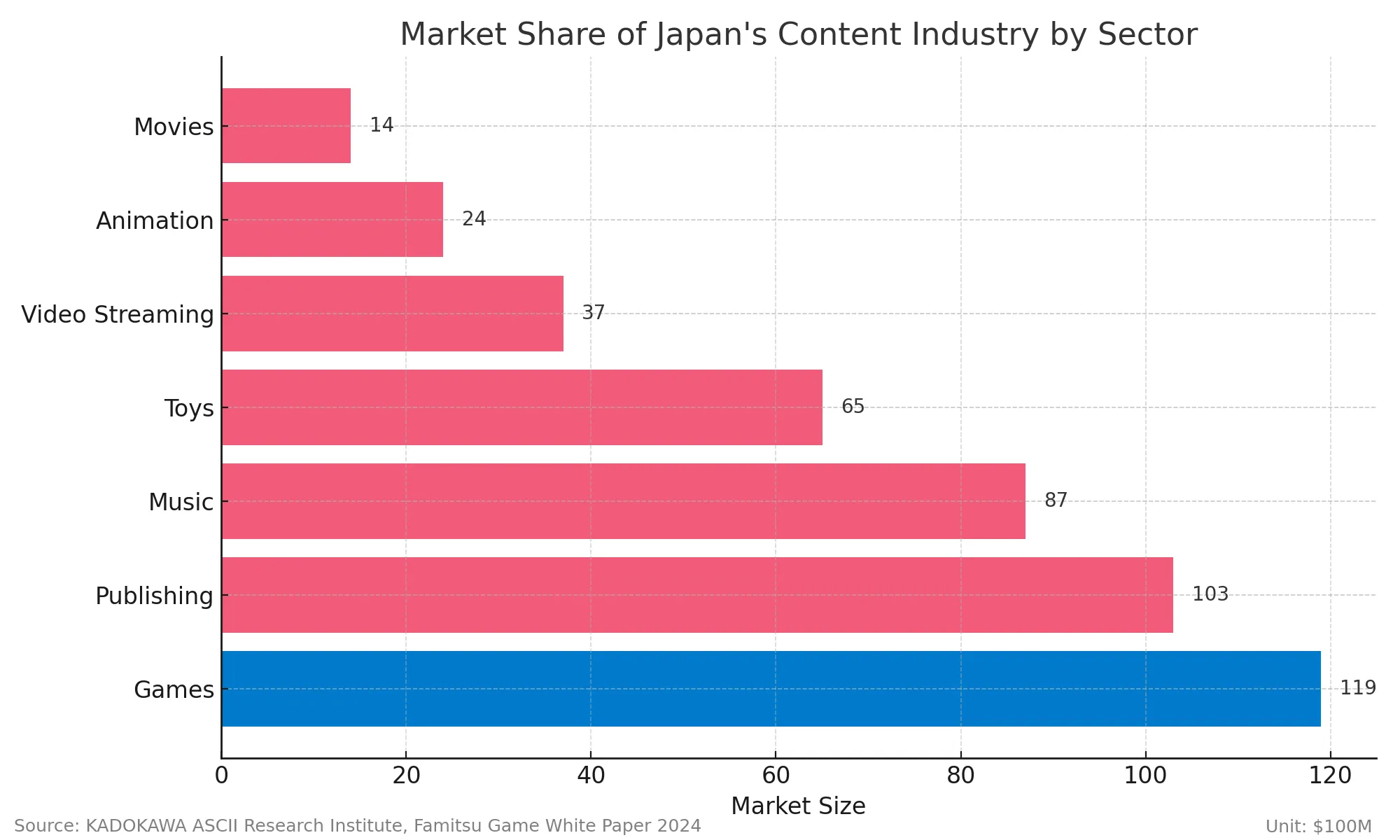
According to the TGS committee, the Japanese game industry now holds the largest share in Japan’s content market—surpassing even anime and manga. Japan’s vibrant game culture and consumer enthusiasm make it a key destination for global game companies aiming to expand in Asia.
In 2024, we witnessed the high energy of Tokyo Game Show firsthand. With 274,739 attendees and a growing international presence, TGS continues to live up to its name as one of the world’s biggest game expos.
The stats speak for themselves: 79% of attendees and 82% of exhibitors reported high satisfaction. Notably, 78% of visitors said they plan to return next year.
Exhibitors emphasized how the event helped them connect with both global buyers and local players—proving TGS is more than a showcase; it’s a launchpad for international growth.
TGS 2025 Dates and Application Deadlines
Like last year, TGS 2025 will be held in a hybrid format—both in-person and online. The physical show will take place at Makuhari Messe in Chiba, Japan, and online activations will be hosted via the official TGS website and Steam.
✔️ TGS 2025 Schedule:
-
- • Business Days (B2B): Sept 25 (Thu) & Sept 26 (Fri), 10:00–17:00
-
- • Public Days (B2C): Sept 27 (Sat) 9:30–17:00 & Sept 28 (Sun) 9:30–16:30
✔️ Application Deadlines:
-
- • Companies applying for more than 42 booths: May 23
-
- • Companies applying for fewer than 42 booths: May 30
📍1 Booth = 3x3m ≒ 10x10ft
TGS 2025 Booth Size & Timeline
| Over 42 Booths | 16–41 Booths | Under 16 Booths | |
|---|---|---|---|
| Application Deadline | Friday, May 23, 2025 | Friday, May 30, 2025 | Friday, May 30, 2025 |
| Booth Assignment Announcement | Tuesday, June 17, 2025 | Tuesday, June 24, 2025 | Tuesday, July 8, 2025 |
| Exhibitor Briefing Session | Tuesday, July 8, 2025 | ||
| Payment Deadline | Friday, July 18, 2025 | ||
*May 31 – June 16: 50% cancellation fee
*From June 17: 100% cancellation fee
Booth positions will be announced ahead of the show, and an official exhibitor briefing is scheduled for July 8.
❗️Booth Assignment Priorities:
- 1. Exhibitors who participated in TGS 2024 and apply before the deadline
- 2. Non-2024 exhibitors who apply before the deadline
- 3. 2024 exhibitors who apply after the deadline
- 4. First-time exhibitors applying after the deadline
When multiple applicants fall under the same priority, booth selection is granted first to CESA members. Then, for those applying for 16 or more booths, space is determined by lottery. For fewer than 16 booths, assignment is on a first-come, first-served basis.
TGS 2025 Booth Pricing by Zone
TGS operates across multiple zones within Makuhari Messe. Booth fees vary by zone and booth type. Please refer to the official price list to calculate your budget accordingly.
| No. | Zone | Exhibition Hall | Exhibition Period | Price (Incl. VAT) |
|---|---|---|---|---|
| 1 | General Exhibition | Halls 1–8 | 4 days | ¥385,000 per booth(3×3m) |
| 2 | AI Technology Pavilion | |||
| 3 | Game Academy Zone | |||
| 4 | AI Technology Pavilion | |||
| 5 | Accessibility Zone | |||
| 6 | Smartphone Games | Halls 9–11 | ||
| 7 | Game Hardware | |||
| 8 | Gaming Lifestyle Zone | |||
| 9 | AR/VR Zone | |||
| 10 | eSports Zone | |||
| 11 | Indie Game Zone | |||
| 12 | Business Solution Zone | Halls 1–8 | 4 days or 2 Business Days | |
| 13 | Family Game Park | Event Hall | 2 Public Days |
“ASOVIVA!” Game Experience ¥275,000 per booth(2.5×2.5m) “MANAVIVA!” Job Experience ¥385,000 per booth(3×3m) |
| 14 | Merchandise Sales Zone | Halls 9–11 | 4 days | ¥440,000 per booth(3×3m) |
| 15 | Business Meeting Zone | International Conference Hall | 2 Business Days | Meeting room: ¥660,000 Booth in another zone: ¥550,000 Table space: ¥220,000 |
📍1 Booth = 3x3m ≒ 10x10ft
New Rules and Key Updates for TGS 2025
1. Booth Structure Standardization
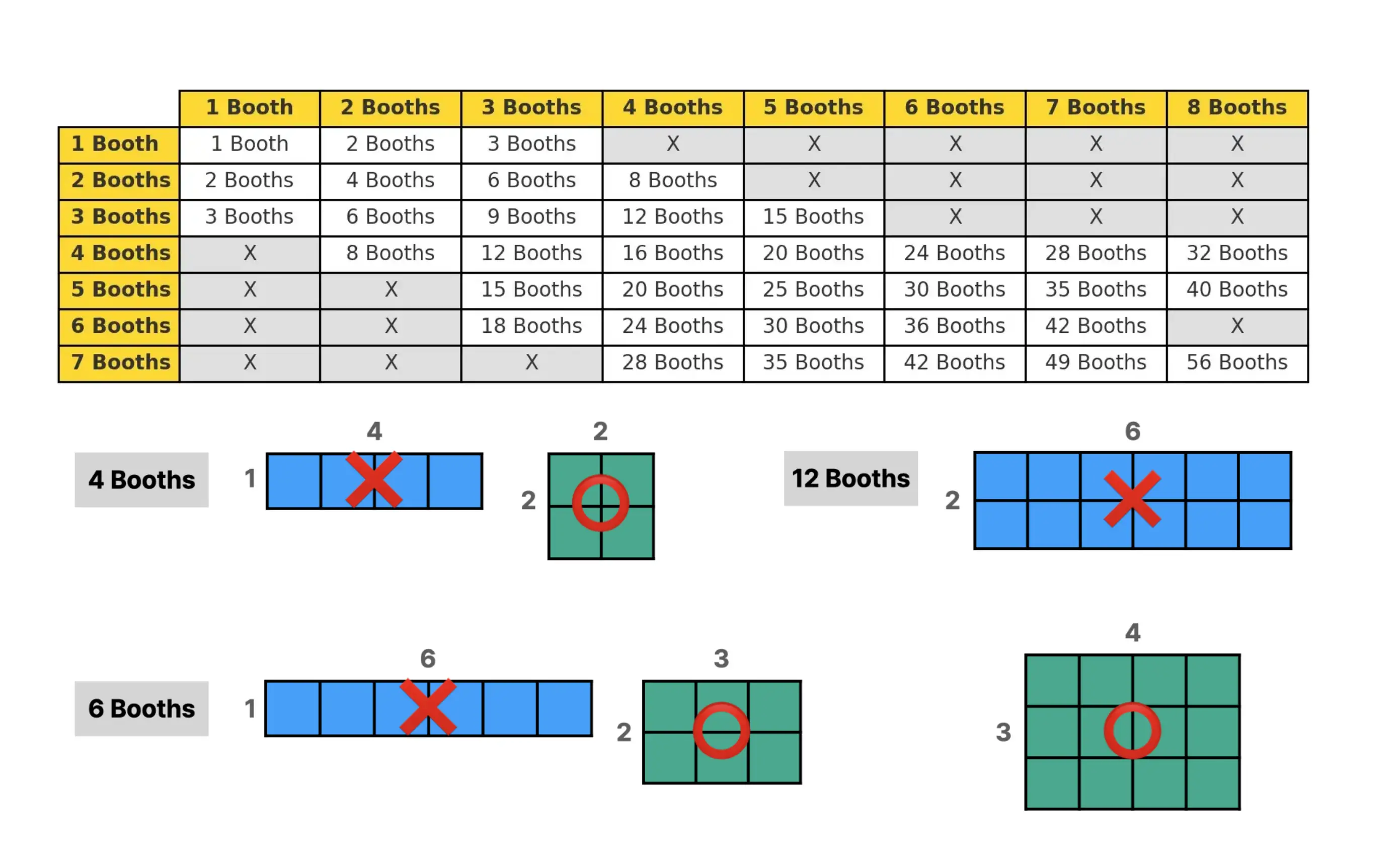
To improve layout efficiency and crowd flow, booth rows are now standardized to 21 meters (7 booths). Only exhibitors applying for 42+ booths may request an island-style layout.
2. Updated Show Hours
B2C opening hours on the first public day have been moved 30 minutes earlier—to 9:30 AM. This allows more time for visitors to enjoy the exhibits and experiences.
3. Stage Layout Regulations
New regulations affect booth stages across all booth sizes:
Be sure to incorporate these guidelines into your booth design to avoid disqualification during approval.
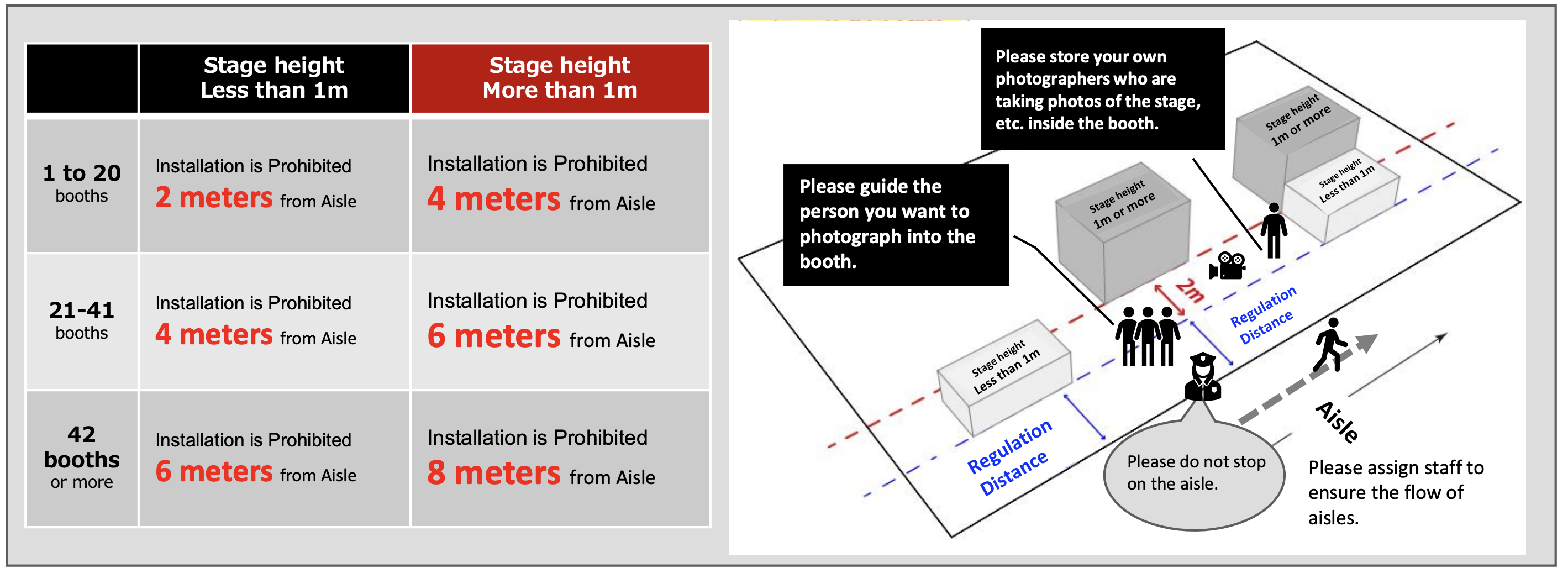
🔎 Example: For 40 booths
– For stages under 1m in height: minimum 4m setback from aisles
– For stages 1m or taller: minimum 6m setback
4. New “Accessibility Zone” Added
TGS 2025 will introduce a new zone dedicated to accessibility and inclusive gaming. This space will feature software, adaptive controllers, voice command systems, and more—showcasing innovation in game accessibility for players of all abilities.
Exhibitor Checklist for TGS 2025
Booth Design Approval Timeline
Booth location announcements and design submissions occur in early to mid-August. Since Japanese contractors often require 1–2 weeks to finalize drawings, design decisions should begin in June. We recommend preparing a flexible booth plan in advance, which can be adjusted after final placement.
Communicating with Japanese Contractors
Japanese vendors may use different terminology, which can cause miscommunication. Use annotated images or diagrams to ensure clarity.
Costume Planning (Cosplayers)
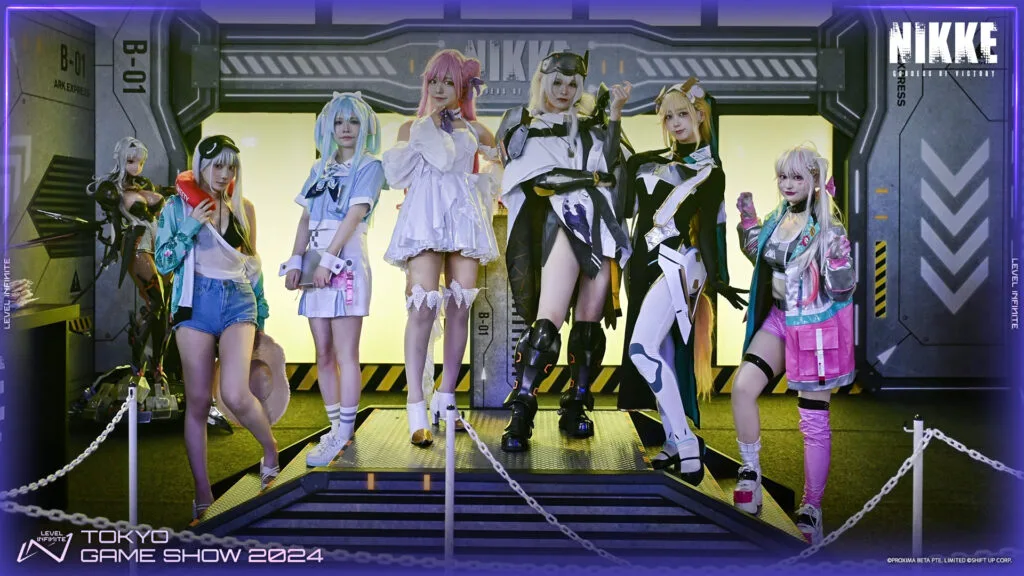
Allow 1–1.5 months for custom costume production, plus 2 weeks for fittings. If hiring local Japanese cosplayers, act early—they’re in high demand.
Booth Setup & Dismantling
Setup time is limited to two days: 8:00 AM–10:00 PM. Overnight access or late construction may require additional fees. In 2024, Day 1 early entry cost ¥100,000, while Day 2 entry was free. Dismantling must be completed by 10:00 PM on the final day.
Japan also follows different payment practices. First-time vendors may require 100% prepayment—no partial payments. Contracts in Japanese take around 3 weeks to process; English contracts may take up to 2 months. Choose partners with Japan-specific experience to minimize risks.
Why Eidetic Marketing?
We have long-standing relationships with trusted Japanese partners, making it easier to manage costs, communications, and deadlines. From Tokyo Game Show and Comic Market to pop-up events and roadshows, we offer tailored planning and execution for the Japanese market.
Let us help you streamline your Tokyo Game Show participation—from booth design and local staffing to setup, rehearsal, and operations.
Stay tuned for Part 2, where we’ll cover TGS rules and key local insights for a smoother on-site experience.