Tag Archives: CES material handling
CES Booth Design: 3 Lessons from Roborock’s Award-Winning Exhibit
August 3, 2026
CES Booth Design: 3 Lessons from
Roborock’s Award-Winning Exhibit
Effective CES booth design is not defined by size alone.
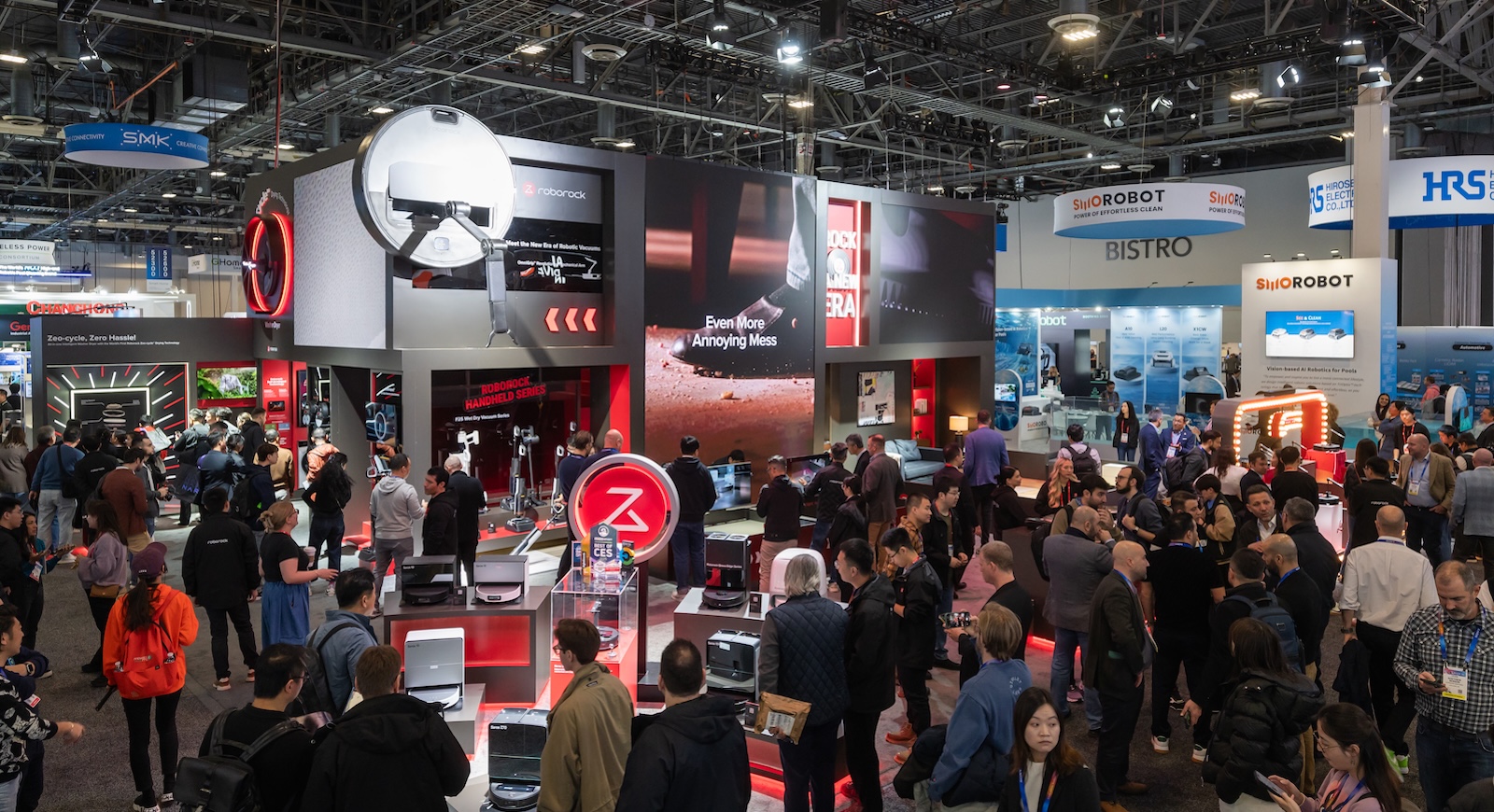
At CES 2026, Roborock’s approximately 495-square-meter exhibit received a Silver Award at the BOSS Awards.
The achievement was particularly significant at a show that brought together more than 4,100 exhibitors across 2.6 million net square feet of exhibit space. In an environment filled with large-scale architecture, product launches, LED installations, and immersive technology, Roborock demonstrated that strategic planning can create impact beyond physical scale.
For companies now planning a CES 2027 exhibit, the project offers three practical lessons.
- 1. Make every square foot count.
- 2. Let the product prove itself.
- 3. Align strategy and execution.
View the official CES 2026 event statistics.

Case Study: Roborock at CES 2026
Client: Roborock · Event: CES 2026
Booth size: ~5,330 sq ft (495 sq m) · Recognition: Silver Award at the CES 2026 BOSS Awards
EIDETIC delivered: strategy, creative concept, spatial design, exhibit fabrication, installation, stage production, and on-site execution
Outcome: An award-winning exhibit that turned advanced robotics into a clear, participatory brand experience
What Are the CES BOSS Awards?
The BOSS Awards, short for Best of Show Stand Awards, recognize outstanding experiential exhibits presented at CES.
The awards evaluate more than visual appearance. Judges consider how an exhibit uses spatial design, technology, product demonstrations, visitor participation, and brand storytelling to create a complete experience.
The 2026 awards recognized 30 exhibits that stood out on the CES show floor. The Top 10 included global technology, mobility, electronics, and industrial brands supported by some of the world’s leading advertising, experiential, and exhibit production agencies.

CES 2026 BOSS Award Top 10
- 1. Waymo
- 2. LG Electronics
- 3. Doosan
- 4. Brunswick Corporation
- 5. Panasonic
- 6. Oshkosh Corporation
- 7. Roborock
- 8. Clarios
- 9. TCL Corporation
- 10. John Deere
How Roborock Turned CES Booth Design into a Brand Experience
Technology brands often arrive at CES with strong products, detailed specifications, and ambitious launch plans. The greater challenge is translating that technical value into an experience visitors can understand within seconds.
A visually impressive booth is not necessarily an effective one. Large LED displays may attract attention without explaining why a product matters, while dense product displays can demonstrate range without establishing a clear brand position.
Roborock’s CES 2026 exhibit approached this challenge differently. Rather than presenting the booth as a collection of product stations, the experience positioned Roborock as an advanced robotics and lifestyle technology brand. Residential environments, live product demonstrations, interactive activities, performance programming, and branded digital content worked together within one spatial narrative.
The technology was not simply described; it was placed in situations that made its value immediately clear. The BOSS Award recognition reflected how effectively the exhibit turned advanced engineering into a cohesive and memorable brand experience.
Watch the Roborock CES 2026 Performance
Lesson 1: Make Every Square Foot Count.
Large CES exhibits naturally create visibility. Global corporations can use monumental structures, suspended signage, large-format media, and expansive product zones to establish an immediate sense of scale. Roborock’s approximately 495-square-meter exhibit, or roughly 5,330 square feet, was substantial. However, it was not a mega-scale environment compared with the largest corporate exhibits at CES.
Its advantage came from how intentionally every part of the footprint was used. Residential settings placed product demonstrations in a recognizable context. Live stages created scheduled moments that drew visitors throughout the day. Interactive activities encouraged participation, while LED content connected the different zones through one consistent visual identity. Every major area served a clear purpose. The booth was organized around the visitor journey, not simply divided by product category.
For exhibitors working within a limited footprint, a smaller space with a clear visitor journey can create a stronger impression than a larger booth filled with disconnected displays. Before increasing booth size, exhibitors should first determine whether each zone supports the central brand message. More space does not automatically create more impact. It can also lead to longer walking distances, weaker focal points, and greater operational complexity.

Lesson 2: Let the Product Prove Itself.
Complex technology is difficult to communicate on a crowded show floor. Visitors rarely stop to read lengthy technical explanations when thousands of other products are competing for their attention. The most effective CES demonstrations turn a technical capability into one clear, visible moment.
One of Roborock’s main demonstrations involved a robot vacuum approaching a 20-centimeter step. Instead of stopping at the obstacle, the machine extended its mechanical legs and climbed the step. The demonstration turned a complex engineering feature into something visitors could understand immediately.
Rather than comparing specifications or listening to a detailed explanation, visitors could simply watch the product overcome a familiar physical limitation. The technology became visible proof, not just another claim on a display panel.

This is the difference between displaying a product and designing an experience around it. The technology becomes a clear, memorable moment rather than another specification on the show floor.
Elsewhere in the booth, visitors could explore robotic lawnmower demonstrations, take part in soccer-themed activities connected to Roborock’s Real Madrid partnership, and examine product controls and design details. Each activation followed the same principle: make the technology tangible and easy to understand.
For exhibitors, the takeaway is simple: identify the product capability that is hardest to explain, then design an experience that shows it clearly.
Lesson 3: Align Strategy and Execution.
A strong creative concept can lose its impact when strategy and execution are separated. For Roborock, the live demonstrations were not added after the booth had already been designed. Instead, they shaped the layout, stage planning, visitor circulation, technical production, and content requirements from the beginning. One team carried the same strategic direction from concept through installation.
This level of integration is especially important for international exhibitors entering the United States. Even brands with strong internal marketing teams may be unfamiliar with U.S. production practices, union labor, rigging, material handling, and LVCC exhibitor services.
The right partner should understand both brand strategy and local show-site execution. That continuity helps protect the original concept throughout engineering, fabrication, installation, and on-site operations.
A Practical CES Booth Design Framework
Before beginning the 3D design process, exhibitors should answer five questions.
1. What Must Visitors Understand?
Choose one central message that explains how the brand or product is different. Visitors should be able to understand the core idea without reading every wall graphic or visiting every product station.
2. What Product Capability Proves It?
Identify the product demonstration, interaction, or comparison that provides visible evidence. The strongest CES exhibits show a product solving a recognizable problem.
3. What Should Visitors Do?
Decide whether visitors should watch, test, compete, compare, register, scan, meet with a representative, or share content. Each activity should support a communication or business objective.
4. How Will the Experience Work at Peak Traffic?
A concept that works in a presentation may fail during show hours. Planning must account for queue management, demonstration timing, staff movement, storage, accessibility, lead capture, meeting spaces, and visitor circulation.
5. Who Owns the Final Experience?
Clarify who is responsible for protecting the original strategy through design development, engineering, exhibit fabrication, installation, and on-site operations. Without clear ownership, individual vendors may complete their assignments successfully while the overall visitor experience becomes inconsistent.
Floor space, fabrication, union labor, rigging, freight, material handling, and exhibitor services all affect the final budget. Get an initial planning range before committing to a design.
What to Look for in a CES Booth Partner
The right CES booth partner depends on how much of the strategy and execution is already in place.
An exhibit contractor may be the right choice when the brand already has a complete concept, technical drawings, and an internal team managing the visitor experience.
When the visitor journey, product demonstrations, stage programming, or activation strategy still need to be developed, an experiential marketing agency can provide the strategic and creative direction.
For a complex international launch, an integrated partner can connect experience strategy with U.S. production and show-site execution.
For Roborock, EIDETIC supported the project across:
- ✔️ CES exhibit strategy and creative development
- ✔️ Attendee journey mapping and spatial storytelling
- ✔️ Booth design, fabrication, and installation
- ✔️ Product demonstration and stage production
- ✔️ Promotional content and staff coordination
- ✔️ On-site supervision and show-floor execution
Because these elements were planned together, the architecture, demonstrations, digital content, and live programming reinforced the same brand story.
The recognition was not simply about how the exhibit looked. It recognized how effectively the environment transformed Roborock’s technology into an experience that visitors could see, understand, and remember.
FAQ for CES Exhibitors
An effective CES booth design connects a clear brand message with visible product demonstrations, visitor participation, spatial storytelling, and practical show-site operations. Every major zone should support a specific communication or business objective.
CES booth costs vary depending on booth size, fabrication, union labor, rigging, freight, material handling, and exhibitor services. Enter your planned booth size in EIDETIC’s Booth Cost Estimator to receive an initial cost range for space rental, construction, and on-site operations before committing to a design.
A live demonstration turns a technical feature into visible proof. It helps visitors understand a complex product quickly and creates a memorable moment that can generate conversations, media coverage, and social sharing.
Strategy, experience design, fabrication, product demonstrations, installation, and on-site management, all connected through one team from concept to show-floor execution.
CES 2026: The World’s Largest Stage for Innovation
September 8, 2025
CES 2026: The World’s Largest Stage for Innovation
Every January, Las Vegas becomes the epicenter of global innovation. As the world’s most influential tech event, CES 2026 (Consumer Electronics Show) will once again bring together leaders from consumer electronics, mobility, AI, and digital health to set the tone for the year ahead.
Why Your Brand Should Exhibit at CES
CES is the world’s most influential technology event, where industry leaders, startups, investors, and media gather each January in Las Vegas to set the year’s agenda.
For attendees, the No. 1 reason to visit CES is to see new products. That means people come ready to explore, engage, and invest in the technologies shaping how we live. For brands, it’s the ultimate platform to launch innovations, build credibility, and form connections that matter.
CES 2025 by the Numbers
- ✔️142,000+ attendees
- ✔️4,500+ exhibitors
- ✔️1,400 startups within Eureka Park
- ✔️305 Fortune 500 companies
- ✔️Participants from 158 countries, territories, and regions
- ✔️53% senior-level executives
These numbers prove why CES remains tech’s biggest stage. From Fortune 500 giants to disruptive startups, the entire ecosystem gathers in one place — making CES the most powerful launchpad for ideas, partnerships, and brand storytelling.
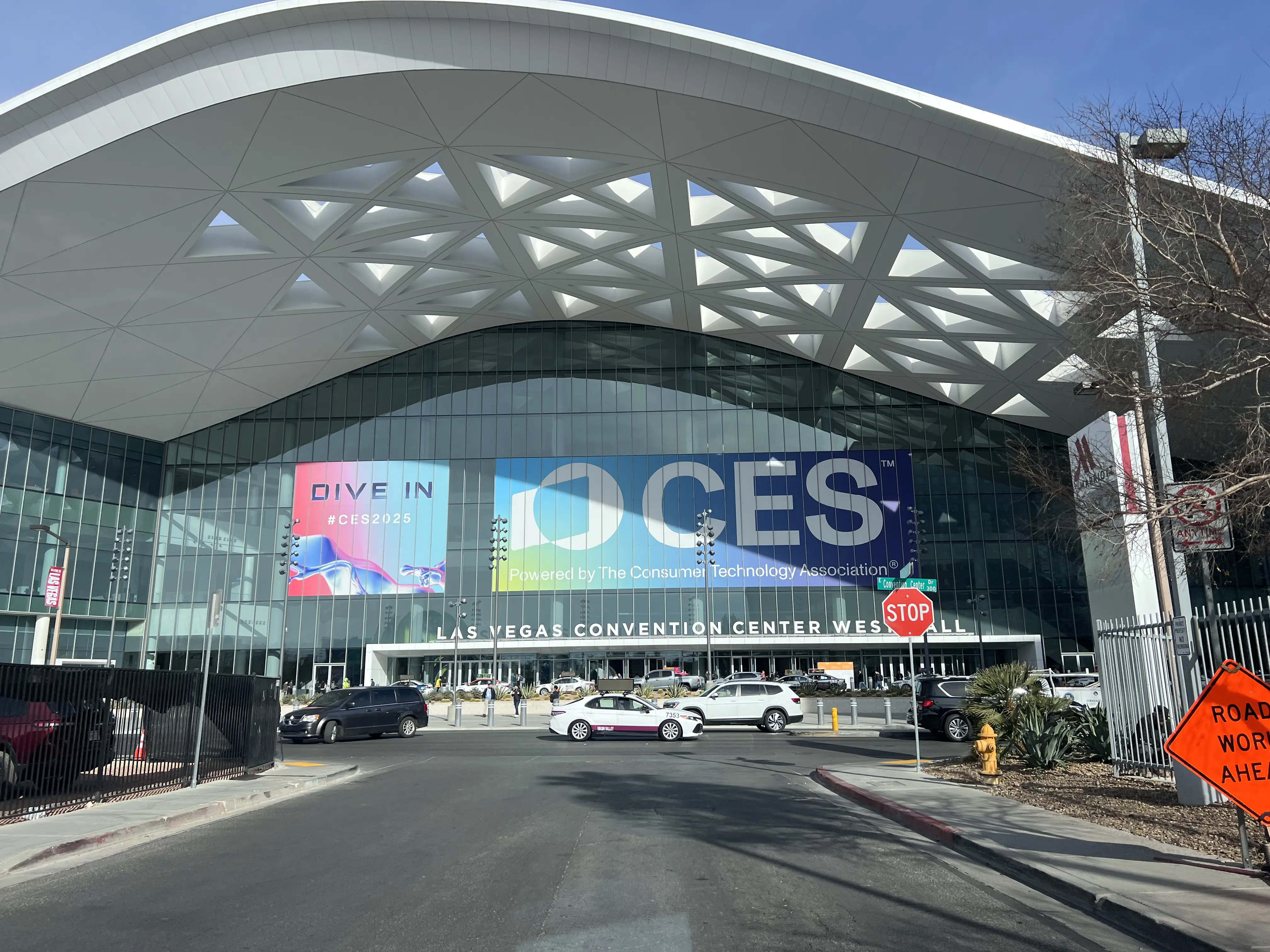
CES 2026 will take place on January 6–9, 2026, in Las Vegas, Nevada, USA.
The Las Vegas Convention Center (LVCC) is the main venue, hosting the largest number of exhibitors and keynote sessions. In addition, partner venues such as The Venetian Expo, Aria Resort & Casino, and other event spaces across the city will feature specialized exhibits, conferences, and networking programs.
But the real value of CES goes beyond the official show dates and venues. Many companies schedule business meetings before and after the event, and countless networking opportunities happen outside the convention halls—in hotels, restaurants, and dedicated meeting spaces throughout Las Vegas.
That’s why CES is not only an exhibition but also a city-wide platform for connections and deal-making.
What Should Exhibitors Know About CES?
Exhibiting at CES is more than booking a booth. To succeed, companies need to prepare for the unique challenges and opportunities of the world’s biggest tech event. Here are some of the most important factors to keep in mind:
1. CES Show Services and Costs
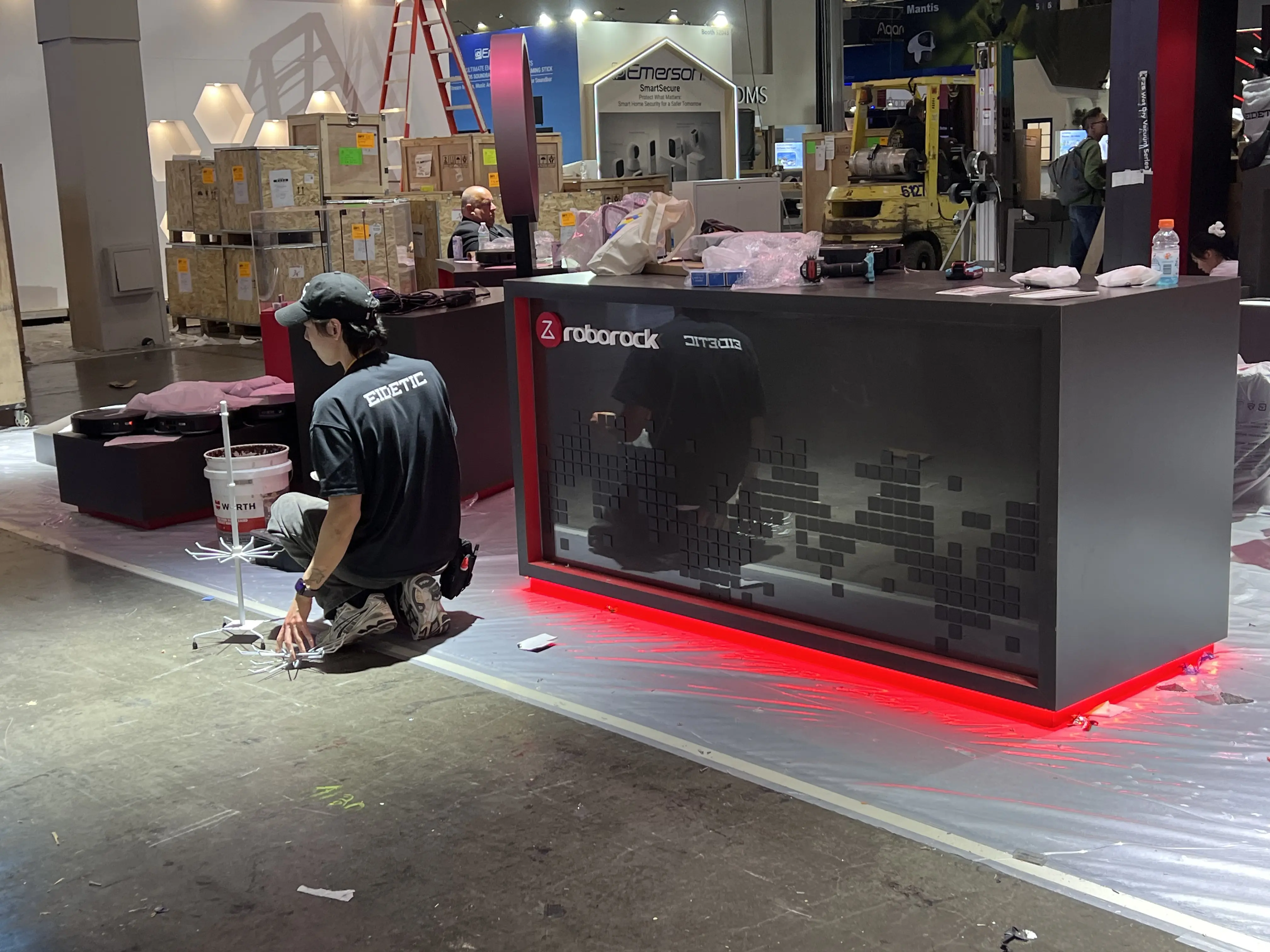
One of the biggest challenges of exhibiting in the U.S. is the cost of show services. Unlike in Asia or Europe, CES exhibitors must work with union labor for almost every task — from installing a single TV screen to electrical wiring or carpentry. Labor is expensive, and because of union rules, you often cannot expect the same speed or flexibility you might find in other regions. This makes booth construction one of the costliest parts of the show.
On top of that, U.S. trade shows apply a drayage fee (also called material handling). Exhibitors are charged based on the weight of every item that enters the venue. This means that every box, crate, or pallet adds to the bill — regardless of distance traveled. Many first-time exhibitors are surprised by these fees, which can significantly inflate overall costs.
Because of these realities, CES booths are often designed to be lighter and simpler. Fabric walls, modular systems, and efficient layouts help reduce expenses compared to heavy wooden structures. It’s also critical to book services like electricity, internet, and water early — early-bird discounts can save thousands of dollars and prevent last-minute cost overruns.
In short, great design is important, but understanding regulations and budgeting for services is what keeps CES projects on track. Smart preparation allows you to maximize impact without being overwhelmed by hidden costs.
Union labor, drayage, show services, and booth construction can quickly change your exhibition budget. Use EIDETIC’s Booth Cost Estimator to calculate an initial planning range covering estimated booth rental, construction, and operational expenses.
2. Promotion and Visibility
CES is not only about what happens inside your booth — it’s also about how you promote it.
Signage and Digital Displays for CES
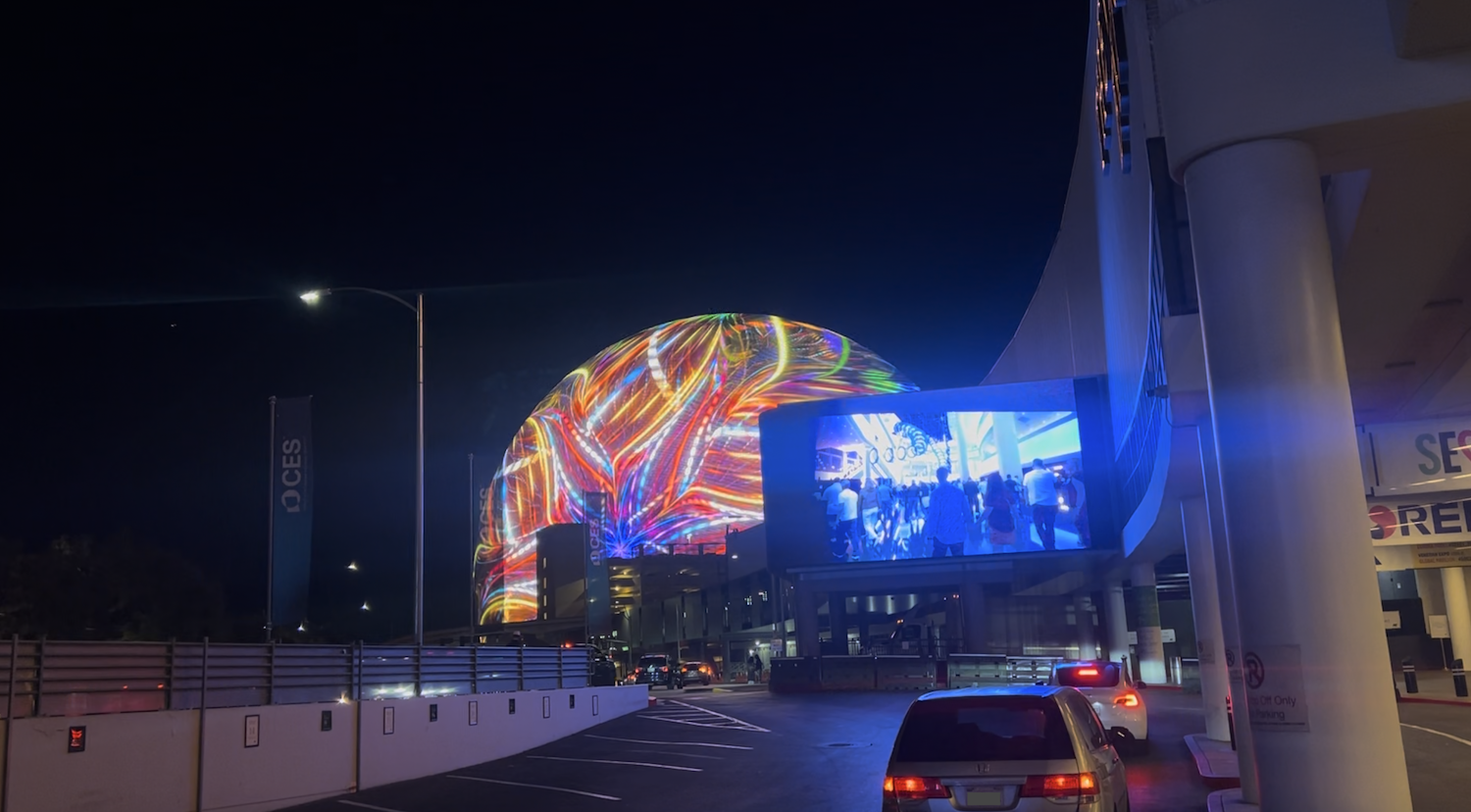
Right outside the Venetian Expo stands one of the most famous digital landmarks in the world: the Sphere. Alongside it, banners and digital signage cover the convention center inside and out. Leveraging these high-visibility placements is key to attracting attention to your booth.
👉 Read more about global Sphere cases
Launch Videos and Online Content
On-site displays matter, but so does online visibility. If your product launch aligns with CES, a launch video can amplify your presence far beyond the show floor. Creative agencies compete to produce 3D-style content and cutting-edge visuals, so choosing the right partner can make all the difference.
3. Hotels, Transportation, and Logistics
During CES, time is your most valuable resource. Hotels near the Las Vegas Convention Center and Venetian Expo are expensive, but staying within walking distance saves countless hours compared to driving and parking.
If your schedule requires moving between the Las Vegas Convention Center and the Venetian Convention Center, plan your routes in advance. Shuttle waits can be long, so knowing pick-up and drop-off zones for taxis or ride-shares will save time and stress. In upcoming posts, we’ll share more detailed tips on transportation and meeting spots.😉
Why Choose Eidetic as Your CES Marketing Agency
Preparing for CES is complex, but choosing the right partner makes all the difference. Eidetic brings proven expertise and global reach to help brands succeed on tech’s biggest stage.
- ✔️Proven Trade Show Experience
With years of experience in major consumer electronics exhibitions, we know how to deliver impact at scale. At IFA 2025, Eidetic served as the lead marketing agency for Midea’s flagship booth — the largest at the show. From design to on-site execution, our team handled every detail with precision.
- ✔️Global Network, Local Expertise
Our headquarters in the U.S. and offices across Asia give us a unique advantage. We combine strengths from each region: U.S. teams for local control, Korea for world-class design, and China for cost-efficient production. This synergy ensures the highest quality while keeping efficiency in mind.
- ✔️End-to-End Management
At Eidetic, we go beyond booth design. From HR staffing and on-site operations to logistics and vendor management, we handle the details so our clients can focus on what matters most: showcasing their innovations.
With Eidetic, you don’t just get a booth — you get a partner who understands CES inside and out. Our goal is simple: to help your brand maximize visibility, minimize risk, and deliver an unforgettable presence at the world’s most influential tech event.
👉 Explore 2025 Roborock at CES