BRIEF US!
Design illuminating activations around the world with us.

THANK YOU FOR YOUR REQUEST
Thank you very much for your interest in EIDETIC MARKETING.
We look forward to working with you.
We will contact you soon.Thanks Again.

THERE WAS A PROBLEM WITH YOUR SUBMISSION.
Have you checked all the required fields?
We want you to write your Company, Name, E-mail, Budget, Country to Execute, Website URL, Wanted Services and Project Description.Thanks.

Tag Archives: AI
Gemini vs. ChatGPT: Who’s Leading the AI Race?
June 6, 2025
Gemini vs. ChatGPT: Who’s Leading the AI Race?
AI Trends Explored Through Google I/O 2025
When we first published our article on AI in early 2024, AI was rapidly transforming the design landscape—unlocking new tools, workflows, and creative possibilities. Since then, it hasn’t just evolved—it has expanded in every direction.
Fast forward to 2025, and AI is no longer an external force designers adopt. It’s becoming a native layer in everything from visual generation and product design to search, software, and even hardware. That shift was on full display at Google I/O 2025 Keynote, where Google introduced major advancements in its Gemini ecosystem—signaling a direct challenge to OpenAI’s dominance with ChatGPT.
So where do the two leading AI platforms stand today? Let’s take a closer look at Gemini vs. ChatGPT.
Key Announcements at Google I/O 2025
1. AI Model Gemini 2.5 Pro & Flash Updates
Google announced continuous improvements to its core Gemini models, emphasizing efficiency and advanced reasoning.
Gemini 2.5 Pro received an “experimental enhanced reasoning mode” called Deep Think, utilizing parallel thinking techniques for highly complex tasks like math and coding. This aims to improve the model’s ability to consider multiple hypotheses before responding, a crucial aspect for tackling intricate problems. Gemini 2.5 Flash also received updates for stronger performance in coding and complex reasoning, optimized for speed and efficiency.
Veo & Imagen 3
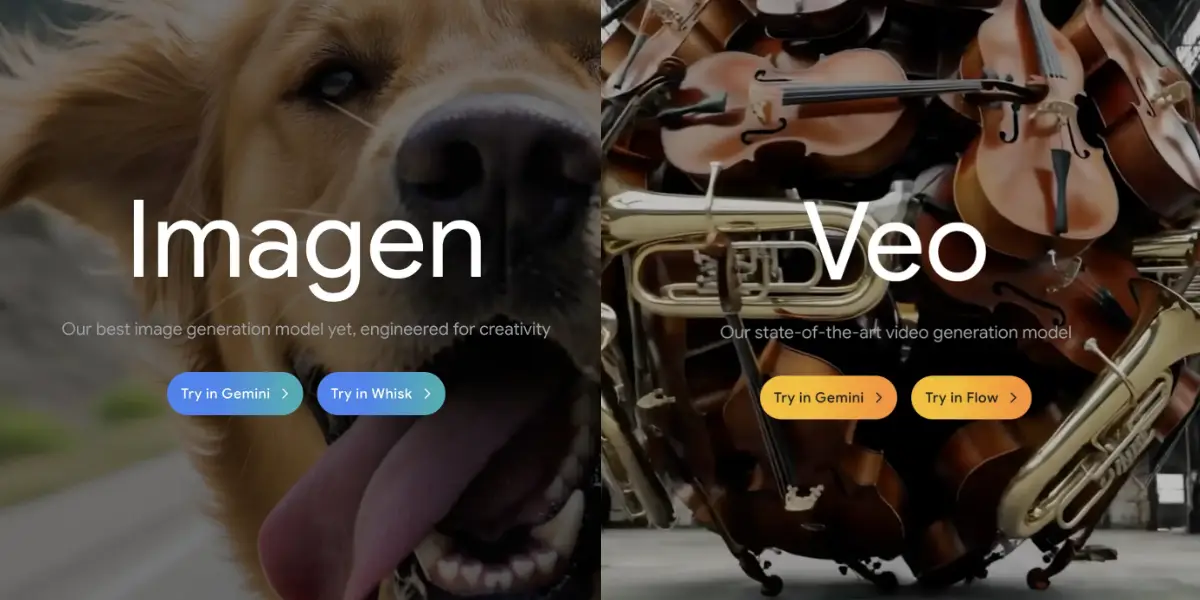
Google showcased advancements in its generative media models. While specific versions like “Veo 3” and “Imagen 4” were mentioned as powering tools and experiences, the overall focus was on enabling more creative control and high-quality generation of video and images. A new AI filmmaking tool called Flow, built with and for creatives using Google DeepMind’s models, was introduced, allowing for cinematic film creation with control over characters, scenes, and styles.
2. Agentic AI & Project Astra
The concept of AI agents, capable of proactive assistance and multi-step tasks, was a central theme.
Project Astra
This ambitious long-term project was publicly demonstrated, showing a “universal AI assistant” capable of perceiving and understanding the world through live camera and screen-sharing, reasoning across modalities, and having fluid, conversational interactions. The AI demonstrated memory of past interactions and observations, moving towards a truly intelligent and assistive agent. Gemini Live now incorporates Project Astra’s camera and screen-sharing capabilities.
Google is also bringing agentic capabilities to Chrome, Search, and the Gemini app, with a new Agent Mode in Gemini designed to help users get more done by understanding intent and executing complex tasks.
3. Search AI Mode & AI Shopping
Google’s flagship product, Search, is being fundamentally reshaped by AI.
AI Mode
Now available to all U.S. users, AI Mode (formerly AI Overviews) provides AI-generated summaries directly in search results. It combines information from multiple sources to deliver clear, concise answers, and has already led to a 10% increase in usage for relevant queries.
Deep Search
For more complex, research-heavy queries, Deep Search offers richer, more in-depth responses. It’s currently being tested in Labs as part of AI Mode’s ongoing development.
AI Shopping
Google is enhancing the shopping experience with interactive product panels, personalized recommendations, and an “agentic checkout” feature that tracks prices and notifies users when they drop.
4. AI Devices: Google Glass, Google Beam, and Android XR
Google’s vision for AI extends to hardware, with new integrations and platforms.
Android XR & Google Glass
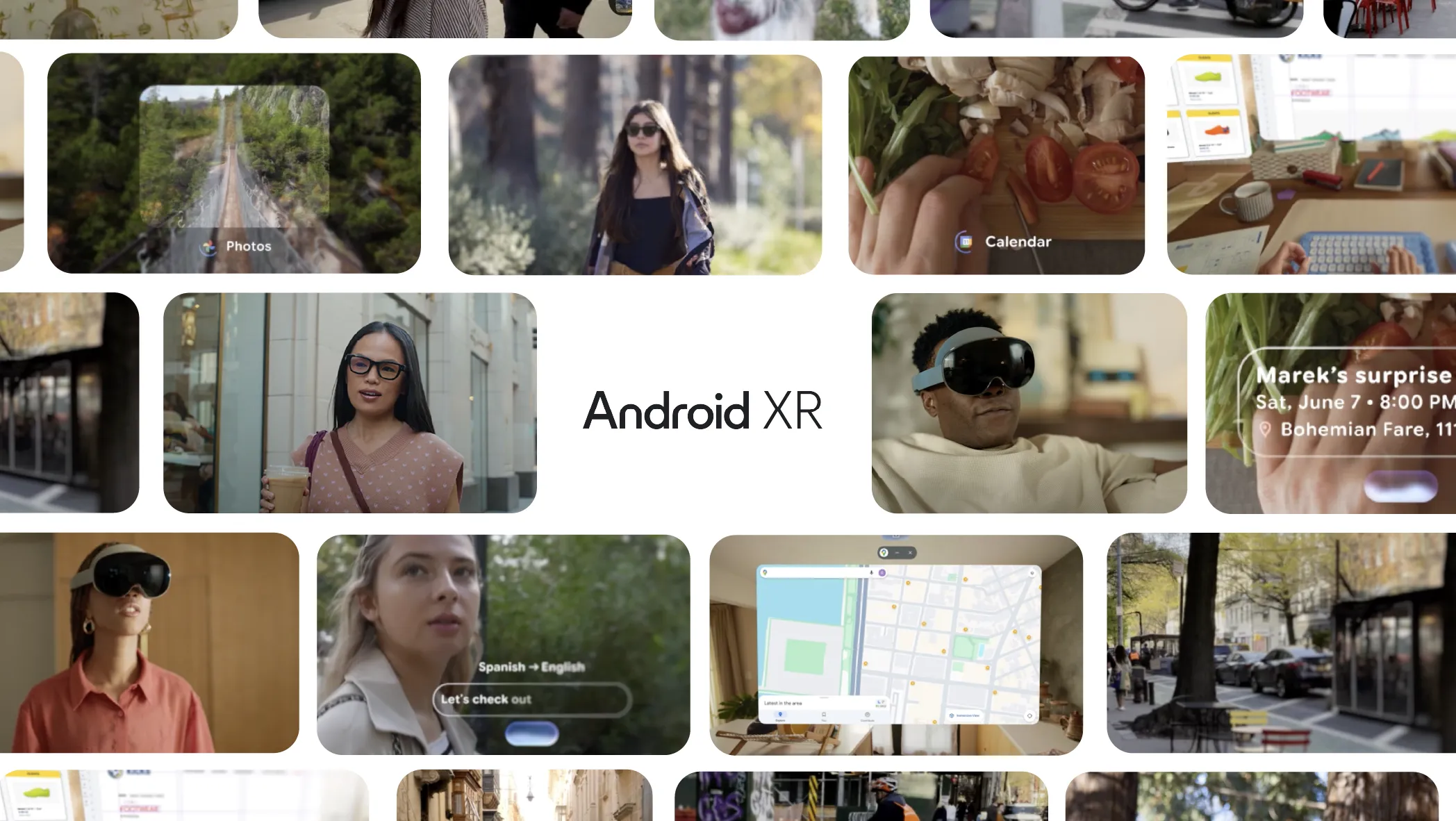
While a specific new Google Glass device wasn’t a standalone announcement, Android XR was a significant focus. This platform aims to bring spatial computing and immersive experiences to devices. New eyewear partners like Gentle Monster and Warby Parker will build glasses with Android XR, indicating a move towards smart glasses that leverage Android and, by extension, Gemini’s capabilities for real-time information overlay and augmented reality.
Real-time Translation
The advancements in multimodal AI and Project Astra’s ability to understand the environment and provide real-time information strongly imply enhanced real-time translation capabilities, though a dedicated “real-time interpreter” device announcement was not the primary focus.
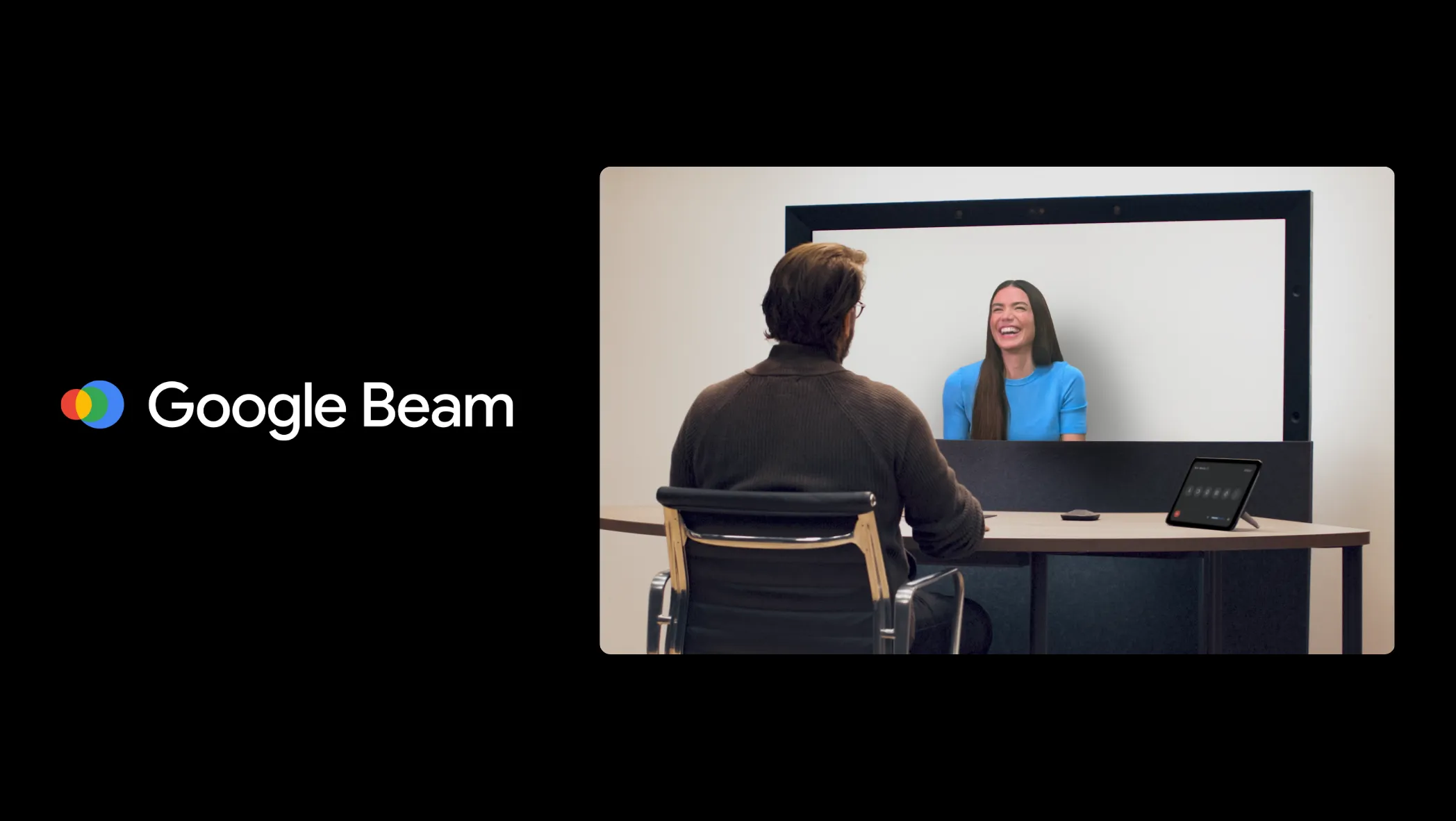
Google Beam
This was demonstrated as a new state-of-the-art video model that transforms 2D video streams into a realistic 3D experience using an array of six cameras and AI, rendering users on a 3D lightfield display. While not a consumer device per se, it showcases Google’s advanced research into immersive AI experiences.
Gemini vs. ChatGPT: A Quick Look
ChatGPT excels in creative writing, natural conversation, and coding assistance. Many users rely on it to draft emails, write stories, debug code, and explain complex topics in a conversational tone.
On the other hand, Gemini shines when it comes to working within the Google ecosystem. It integrates naturally with tools like Gmail, Docs, Drive, and Calendar, making it a convenient assistant for users who already rely on Google’s productivity apps. From summarizing emails to drafting documents or helping organize schedules, Gemini is designed to work where many people already do.
If you’re looking for a tool that helps with creative content and programming tasks, ChatGPT is likely the better fit. But if your workflow depends heavily on the Google ecosystem and you need live access to current information, Gemini may serve you better.
Gemini vs. ChatGPT Pricing
Here’s a simplified breakdown of Gemini and ChatGPT pricing tiers.
| Google Gemini | OpneAI ChatGPT |
|---|---|
| Free Plan: $0/month | Free Plan: $0/month |
| • Gemini 2.5 Flash • Limited access to 2.5 Pro • Image generation (Imagen 4) • Gemini Live, Canvas, Gems, NotebookLM (basic) • 15GB storage | • GPT-4.1 mini (limited) • Limited access to GPT-4o, OpenAI o4-mini, and deep research • Limited file upload, image generation, and voice mode • Create/use custom GPTs |
| Google AI Pro: $19.99/month | ChatGPT Plus: $20/month |
| • Full access to Gemini 2.5 Pro + Deep Research • Veo 3 video generation (trial) • Flow (AI filmmaking tool) • 2TB storage + Gemini in Gmail, Docs, Chrome • Free for students | • GPT-4.5 research preview + GPT-4.1 optimized for code • Standard + advanced voice mode (incl. video/screensharing) • Create projects, tasks, use custom GPTs |
| Google AI Ultra: $249.99/month | ChatGPT Pro: $200/month |
| • Highest limits for 2.5 Pro Deep Think & Veo 3 video gen • Access to Project Mariner (agentic research) • YouTube Premium individual plan included • 30TB storage (Drive, Photos, Gmail) | • Unlimited access to GPT-4o and all reasoning models • Advanced voice & video + extended deep research + Codex agent preview • Sora video generation access (preview) |
Can Google Catch Up to ChatGPT?
As of now, ChatGPT dominates the generative AI market with over 80% share, according to Statcounter. In contrast, Google’s Gemini holds just around 2%, signaling a significant gap. But that might not last forever.
The 2025 Google I/O keynote made it clear: Google is serious about closing that gap. With powerful tools like Search, Maps, Gmail, YouTube, and Android already integrated into users’ lives, Gemini has the potential to become more than just an alternative—it could become the default. If its performance matches ChatGPT’s, the seamless integration across Google’s ecosystem could lead many users to switch.
But instead of viewing this as a head-to-head rivalry, it may be more accurate to see the two AIs heading in different directions. ChatGPT will likely continue evolving as an educational and research-focused assistant—strong in structured reasoning, content generation, and Q&A tasks.
Gemini, by contrast, will become a lifestyle AI, deeply embedded into Google’s hardware ecosystem—from smart glasses and mobile devices to in-car systems. Just as Google has long blended software with consumer hardware successfully, Gemini aims to assist users in their everyday lives with more context-aware, real-world support.
In that sense, the question may not be who wins, but how each AI finds its role.
This divergence signals a broader shift in how we think about AI—not as a single winner-takes-all race, but as a future shaped by different tools for different needs.
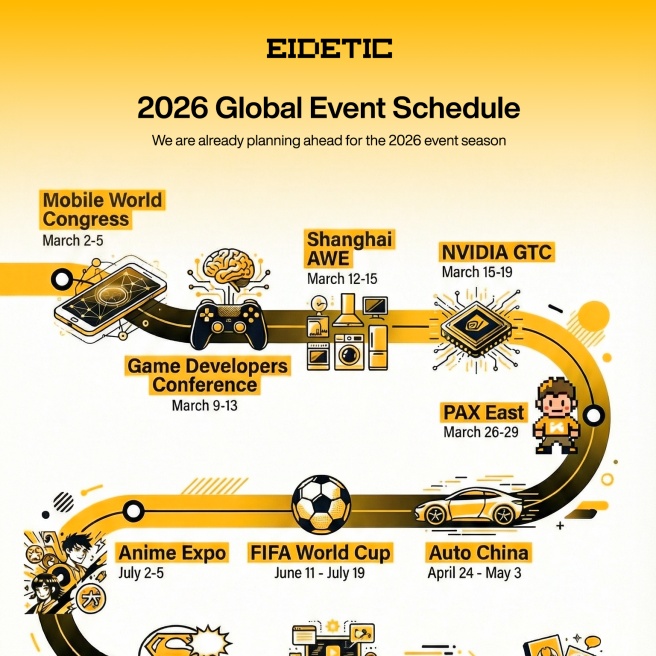
Looking to bring your tech event to life?
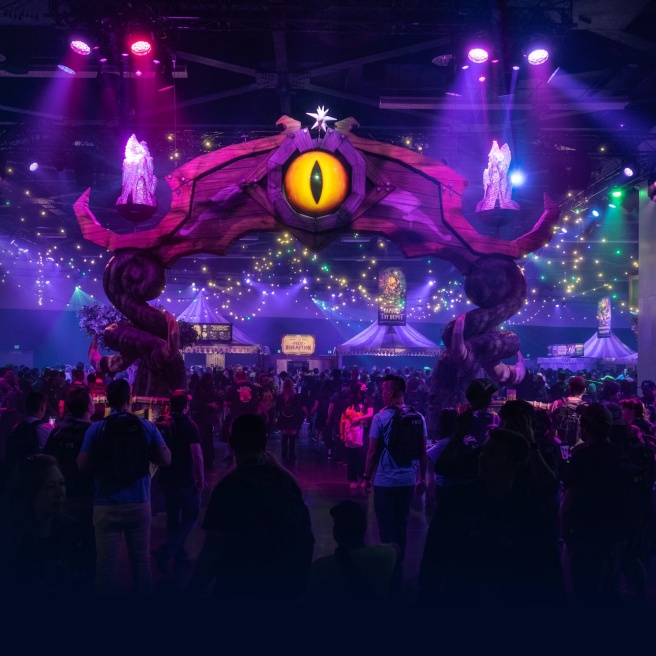
At Eidetic Marketing, we specialize in designing and producing global events—from Google I/O Keynote to TED conferences, roadshows, and networking parties. Whether you need help with concept planning, spatial design, or full-scale operations, our team can make it happen.
👉 Explore Our Portfolio
TED Conference
Samsung Foundry Forum
Google Playtime Korea

AI’s Impact on the Design Landscape
February 1, 2024
[EIDETIC INSIGHT] AI’s Impact on the Design Landscape
by Luke Song

In the dynamic landscape of design, the integration of Artificial Intelligence (AI) stands as a transformative force, reshaping traditional approaches and propelling the field into new realms of innovation. As we explore the intricate interplay between AI and design, a nuanced understanding of key trends unveils the profound impact of technology on creative expression and user experiences.
01. Widespread Use of Generative Design
Generative AI has sparked a paradigm shift in art and design, evident since Midjourney’s groundbreaking win at a 2022 art contest. This pivotal moment marked the dawn of AI’s creative prowess, challenging conventional notions of authorship and inspiration. Midjourney’s capabilities have improved since then and has become prolific in the design scene. Even esteemed firms such as Zaha Hadid Architects has admitted to using Dall-E 2 and Midjourney in their ideation phase.
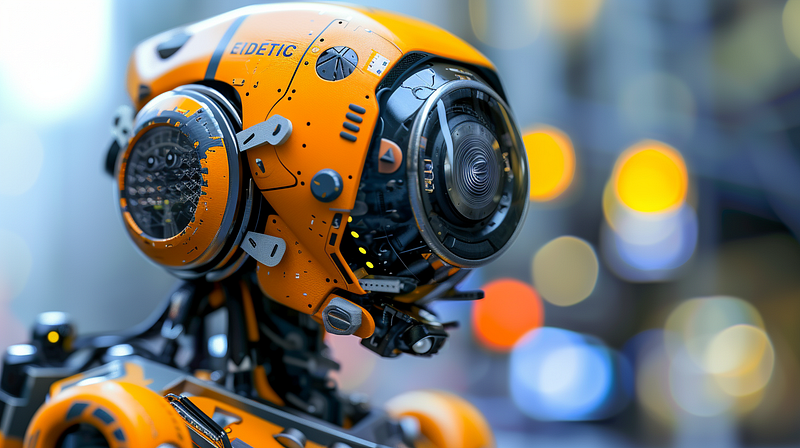
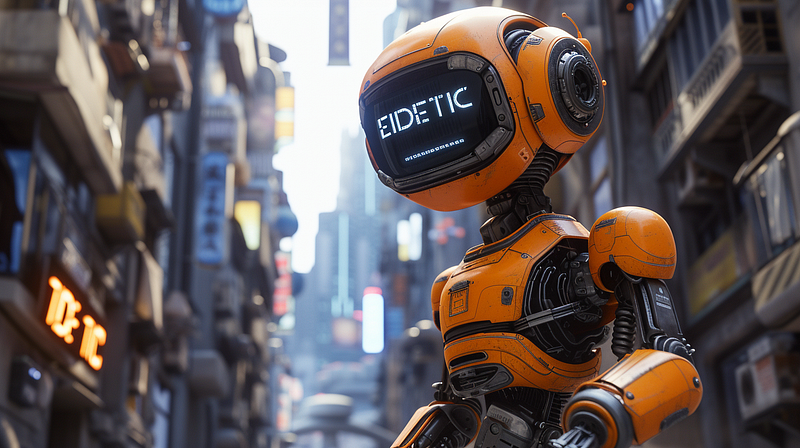
As examples showcasing generative AI’s capabilities,
we generated these images of a robot donning our company name and color.Moreover, tools like Autodesk’s Fusion 360 Generative Design democratize design exploration, empowering creators across disciplines to unlock novel solutions to complex challenges. By fusing AI algorithms with user-defined constraints, the design process accelerates, fostering a culture of experimentation and discovery. Platforms like Runway pave the way for text-to-video generation, promising unprecedented creative possibilities in digital content creation.
02. Personalized Experiences in User Interface Design
AI-driven personalization is revolutionizing user interface design, offering tailored experiences that resonate with individual preferences. From Netflix’s sophisticated recommendation engines to dynamic e-commerce interfaces, AI algorithms analyze user behavior to curate content and optimize interactions. This level of customization enhances user satisfaction and cultivates deeper engagement and brand loyalty.
Exploring AI techniques such as collaborative filtering and natural language processing unveils the intricate mechanisms underpinning personalized experiences. As designers navigate ethical implications regarding data privacy and user consent, transparency and accountability remain paramount in fostering trust and integrity in UI design.
03. Automation and Efficiency in Product Design

Topology optimization starts with a human-designed model and systematically removes material to achieve an optimal design that satisfies specific constraints such as weight and structural integrity
In product design, AI serves as a catalyst for efficiency and innovation, streamlining workflows and accelerating time-to-market. Siemens’ NX software exemplifies this trend, integrating AI-driven features like generative topology optimization to empower designers with actionable insights and iterative capabilities. By automating repetitive tasks and harnessing predictive analytics, AI enhances the creative process, allowing designers to focus on strategic decision-making and problem-solving.
04. AI in Experiential Marketing
In the realm of experiential marketing, AI is pushing the boundaries of what brands can achieve, blurring the lines between the digital and physical worlds. Agencies like Jack Morton Worldwide and Invisible North are leveraging AI to create immersive brand experiences that captivate audiences and drive engagement.
From AI-powered chatbots to AR/VR experiences infused with AI-led technologies, brands are embracing AI to create impactful storytelling experiences. By harnessing the power of AI, marketers can create personalized, immersive experiences that resonate with audiences on a deeper level, driving brand affinity and loyalty.
As marketers navigate the evolving landscape of AI in experiential marketing, ethical considerations remain paramount in safeguarding consumer trust and privacy. By prioritizing transparency and inclusivity, brands can leverage AI to create authentic and impactful experiences that resonate with diverse audiences.
05. Collaborative Intelligence in Design

IBM’s Watson Design AI embodies collaborative intelligence, where human designers collaborate with intelligent systems to co-create innovative solutions. By leveraging AI-driven insights and recommendations, designers gain new perspectives and uncover hidden opportunities for creativity and innovation. This collaborative approach fosters a culture of exploration and experimentation, driving meaningful change in design practices and outcomes.
As AI continues to reshape the landscape of design, ethical considerations remain at the forefront of innovation. Tools like Google’s Perspective API exemplify the importance of ethical design practices in AI-driven solutions, promoting fairness, transparency, and accountability in digital spaces. (AI’s Impact on the Design)
06. Challenges and Ethical Considerations
Implementing Generative AI poses challenges, including data biases and ethical concerns. Ensuring fairness, transparency, and accountability is essential to mitigate these risks. Concerns regarding job displacement and creative originality also prompt discussions, highlighting the need for ongoing dialogue and proactive measures to address these challenges.
07. The Future of AI and Human Creativity
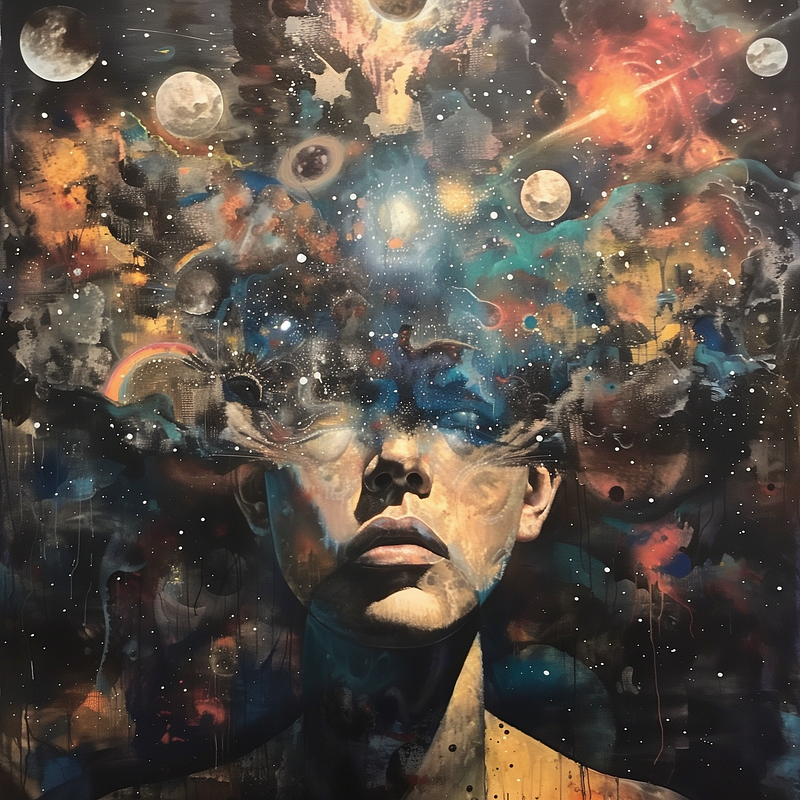
What does the future hold for human creativity?
Looking ahead, Generative AI is poised for significant advancements, with systems becoming more sophisticated and creative. Future developments may include AI seamlessly collaborating with humans in creative processes, more intuitive user interfaces, and AI systems interpreting human emotions to create personalized content. The convergence of Generative AI with emerging technologies like quantum computing could lead to unprecedented levels of efficiency and creativity.
While AI continues to advance at a rapid pace, experts agree that humans will remain essential in the creative process. As AI enhances creativity and enables new possibilities, it’s the human element that adds depth and meaning to experiences. Human-AI collaboration, as seen in projects like Deeplocal‘s AI-powered musical instrument, exemplifies how technology can enhance, rather than replace, human creativity.
As AI continues to reshape the landscape of design and experiential marketing, the future holds endless possibilities. From generative design tools that unlock new realms of innovation to AI-powered personalization that enhances user experiences, the transformative potential of AI in design is vast and profound. By embracing AI as a partner in the creative process, designers and marketers alike can unlock new avenues of exploration and drive positive change in the world of design and beyond. (AI’s Impact on the Design)